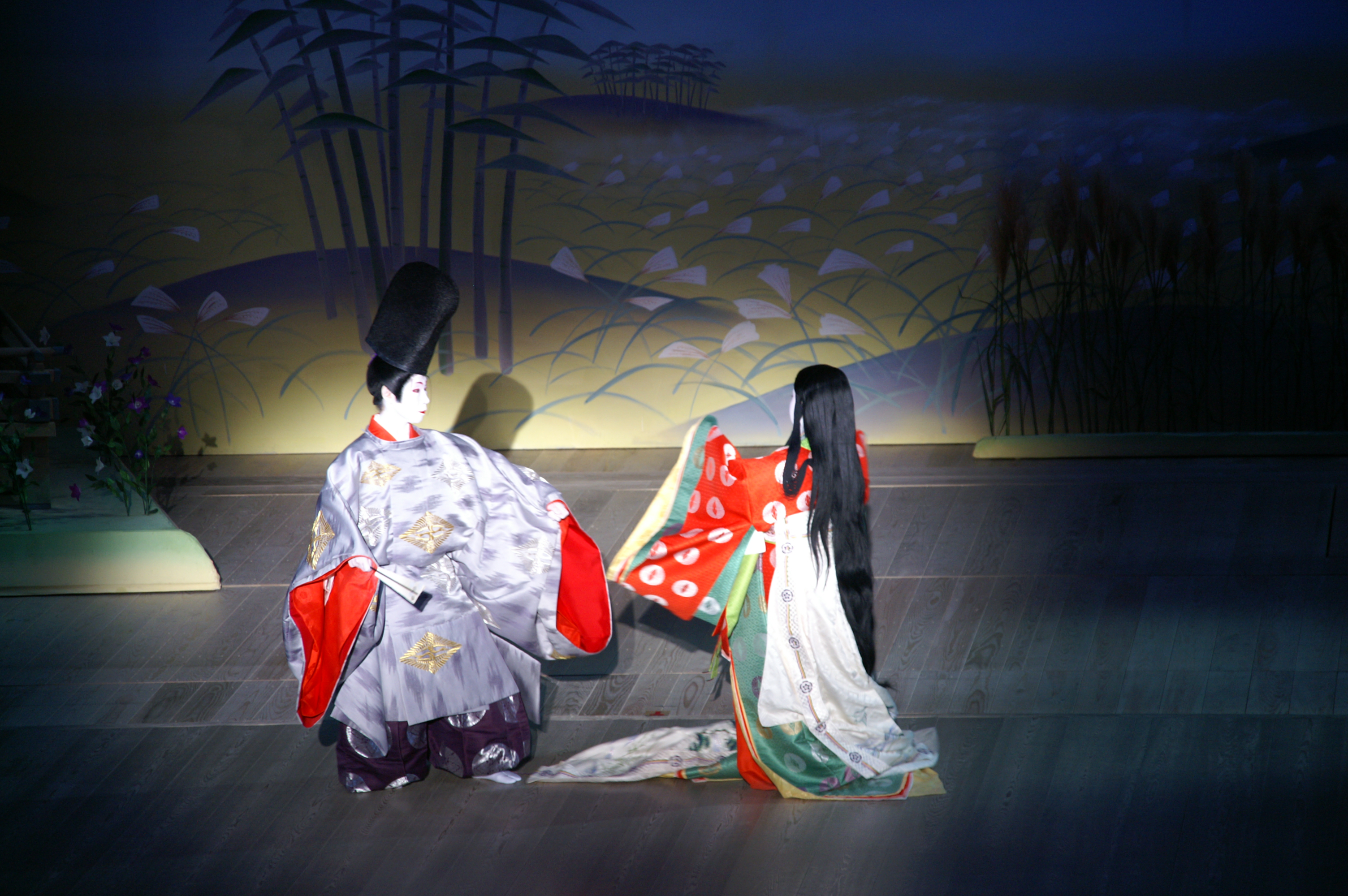
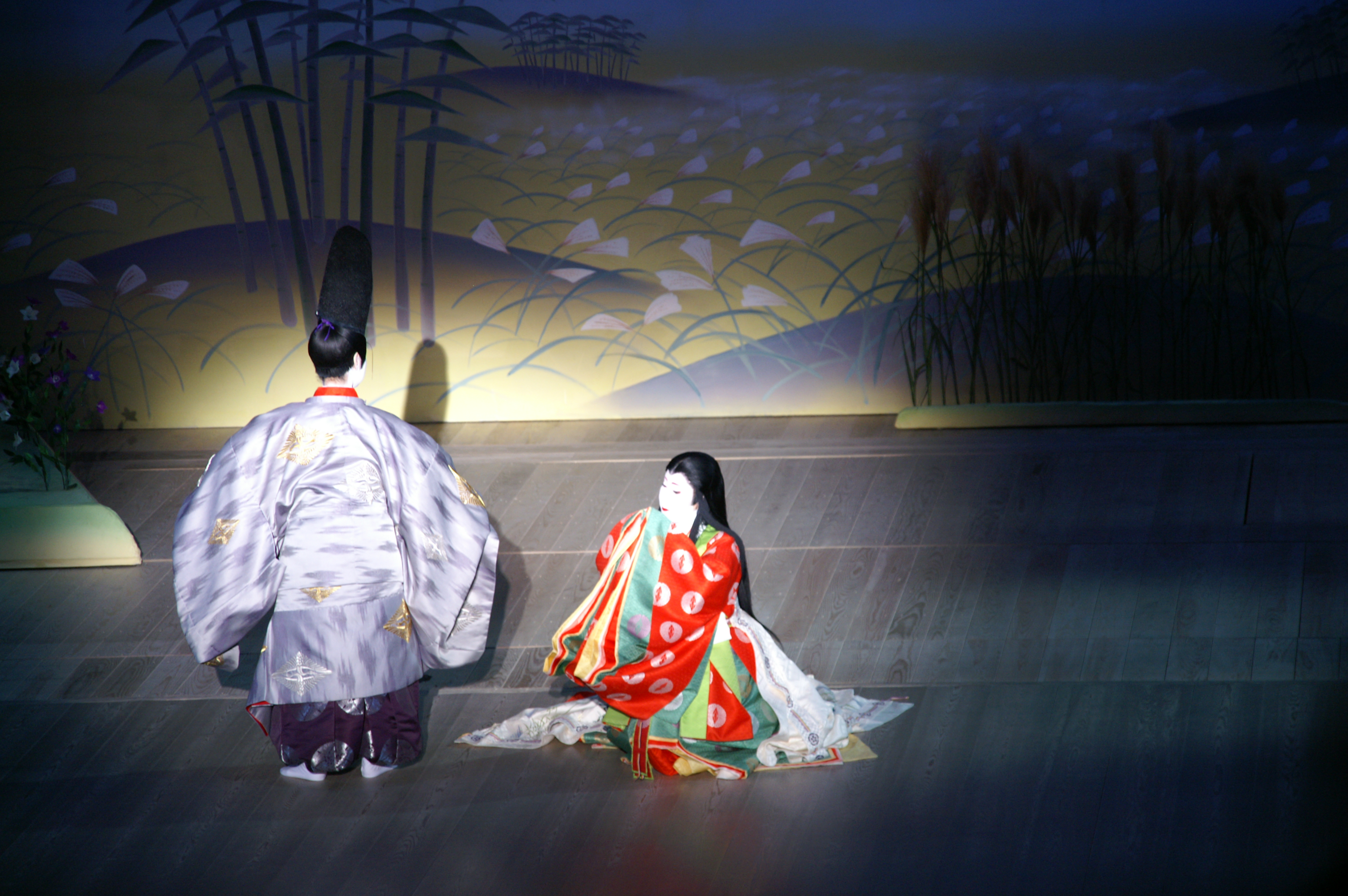
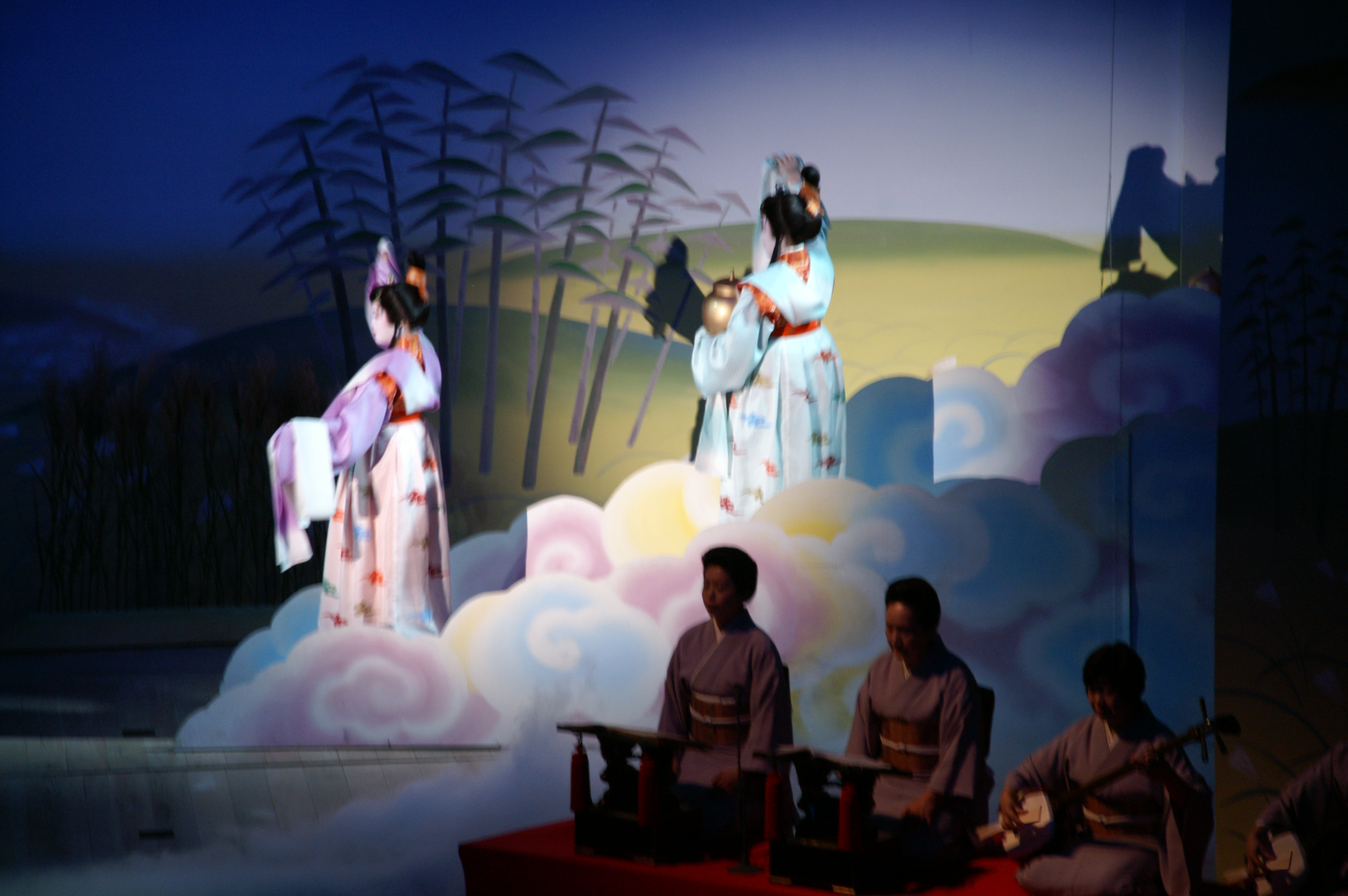
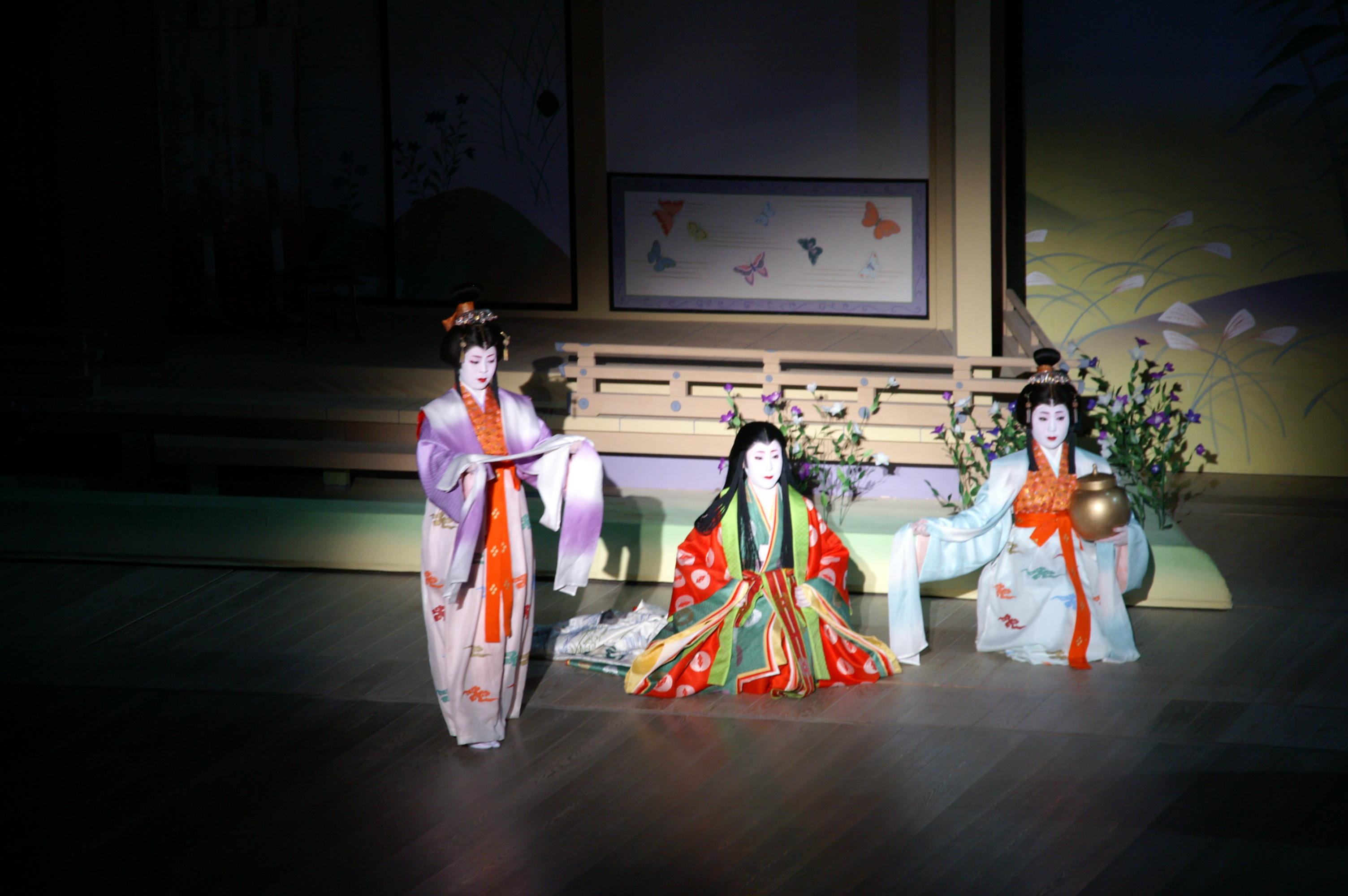
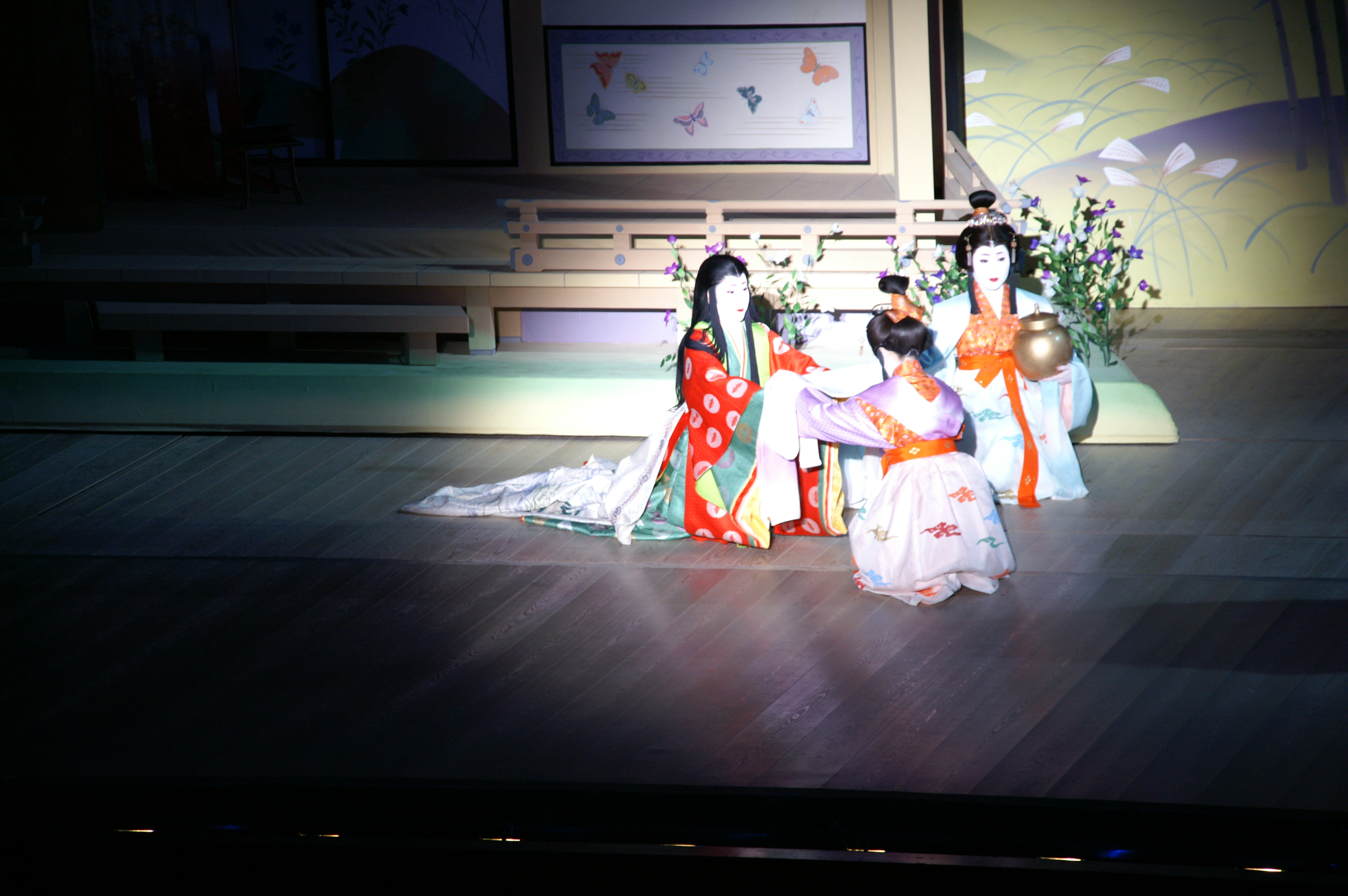
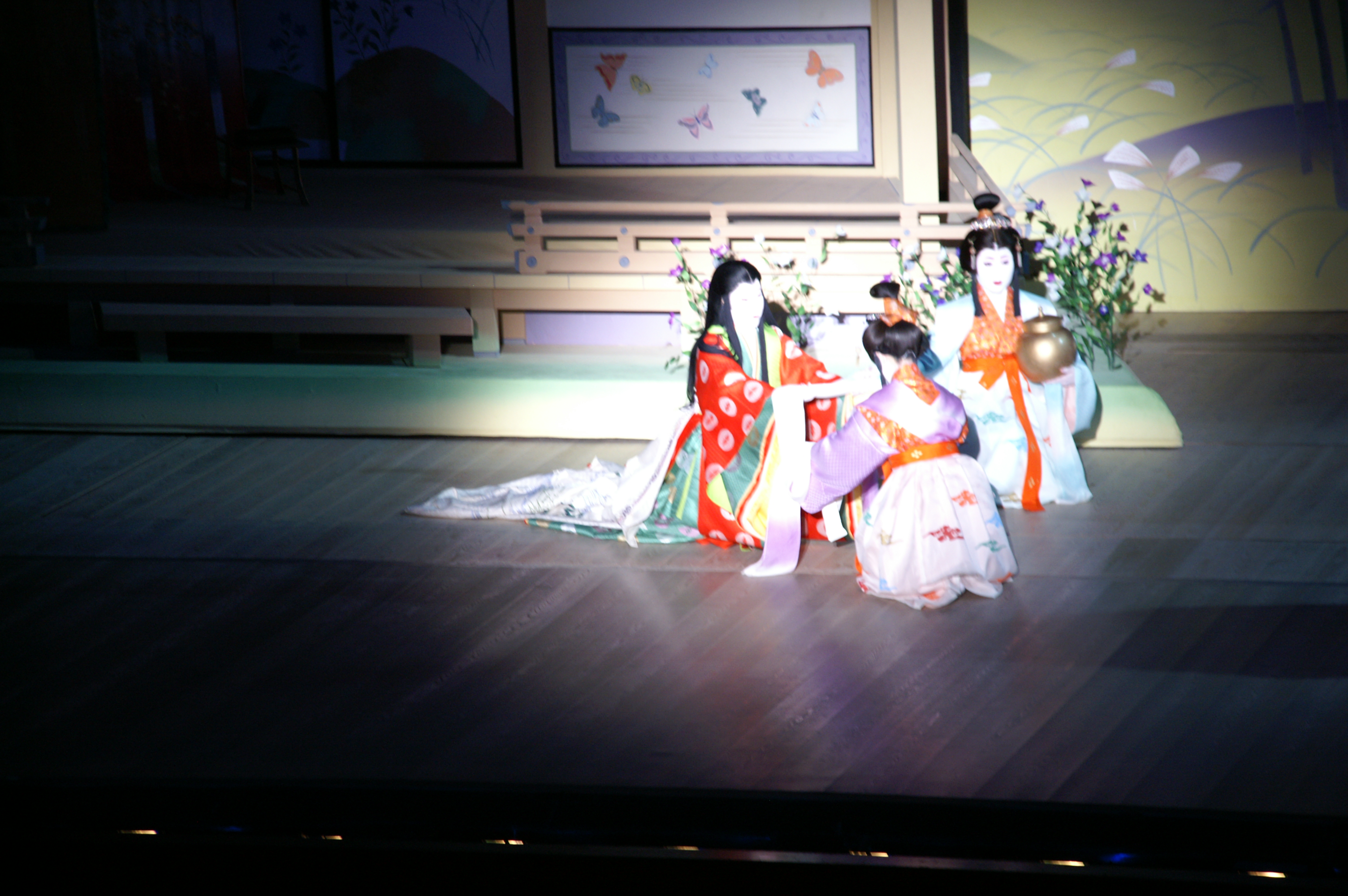
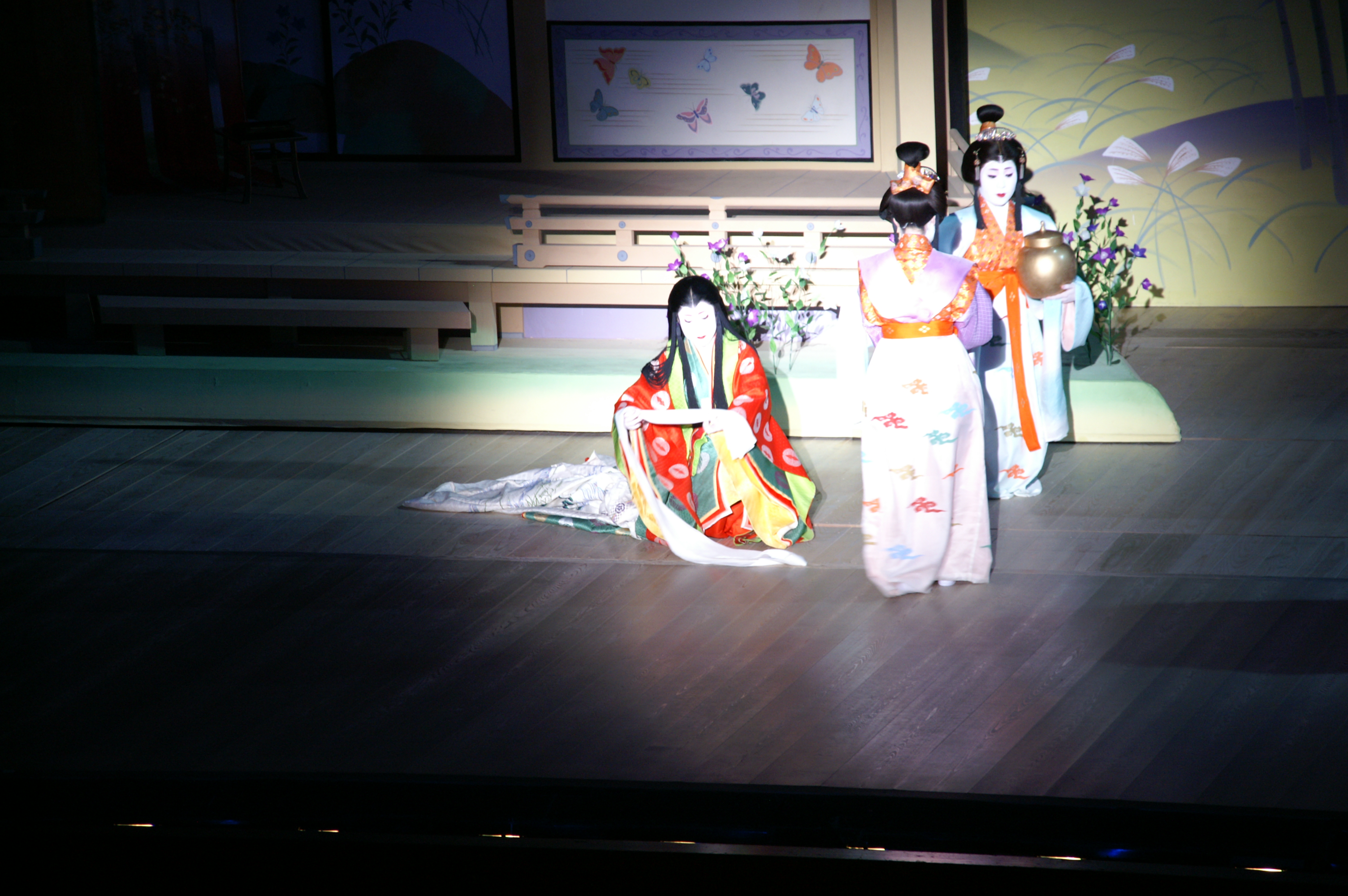
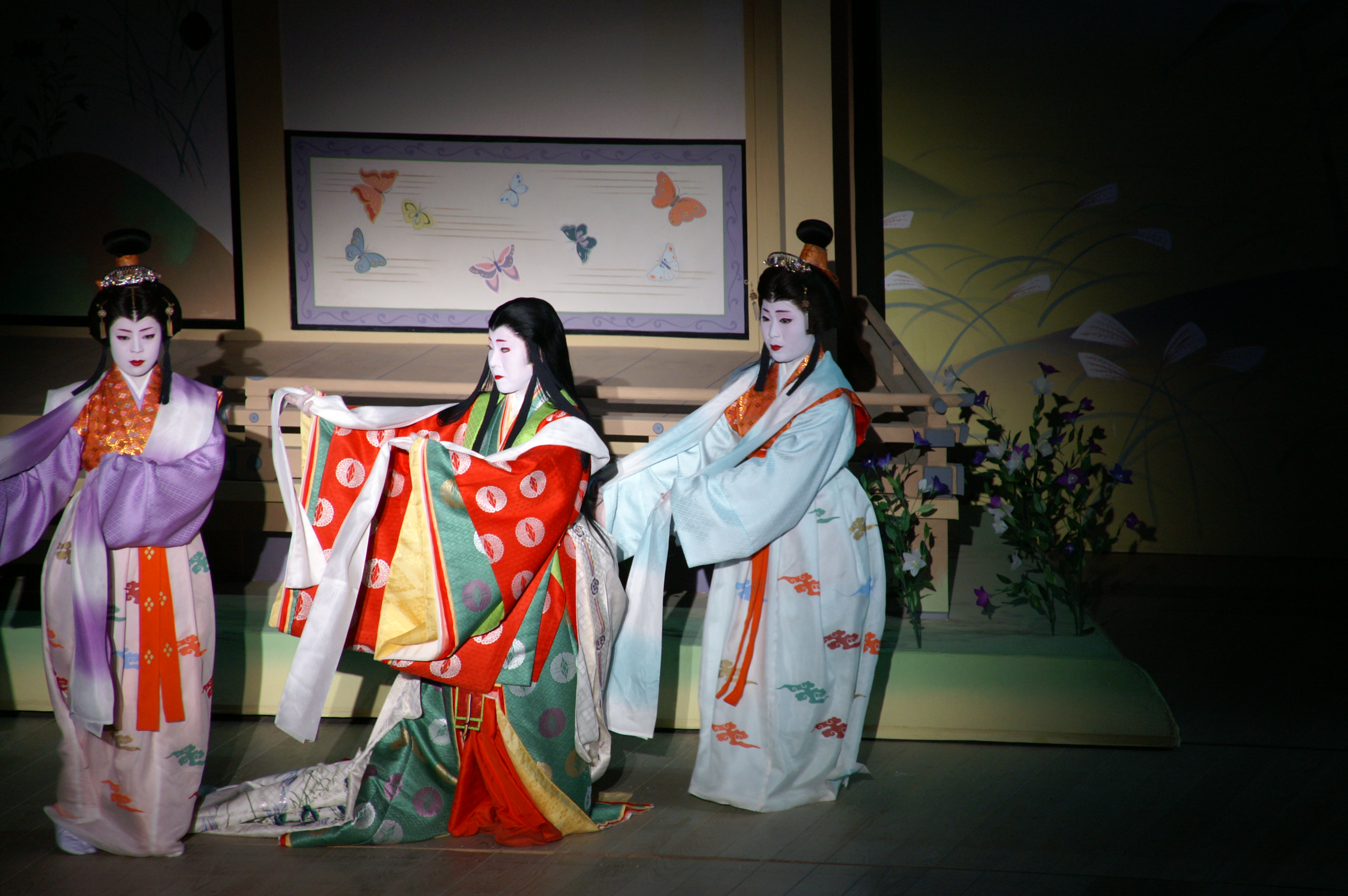
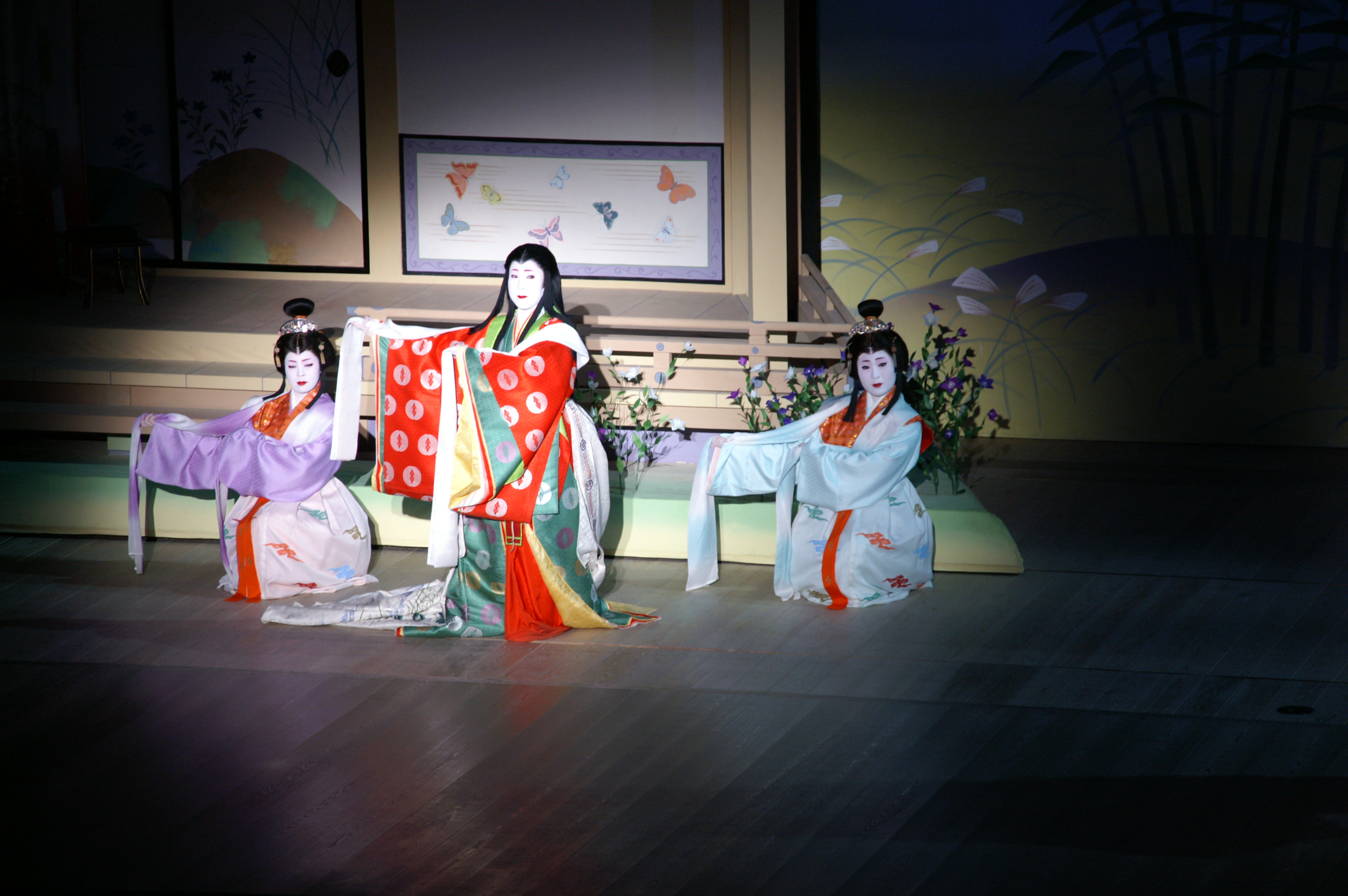
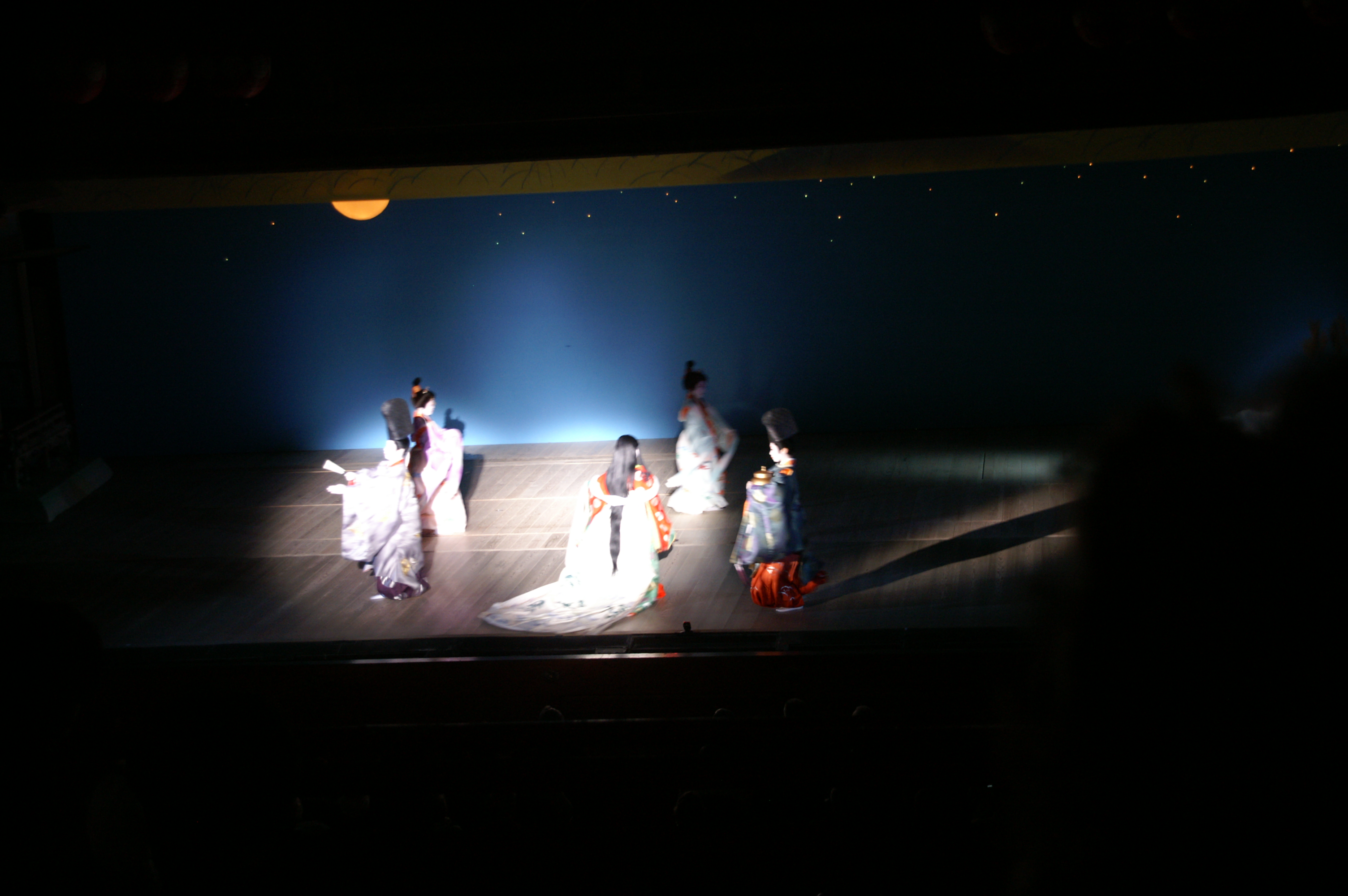
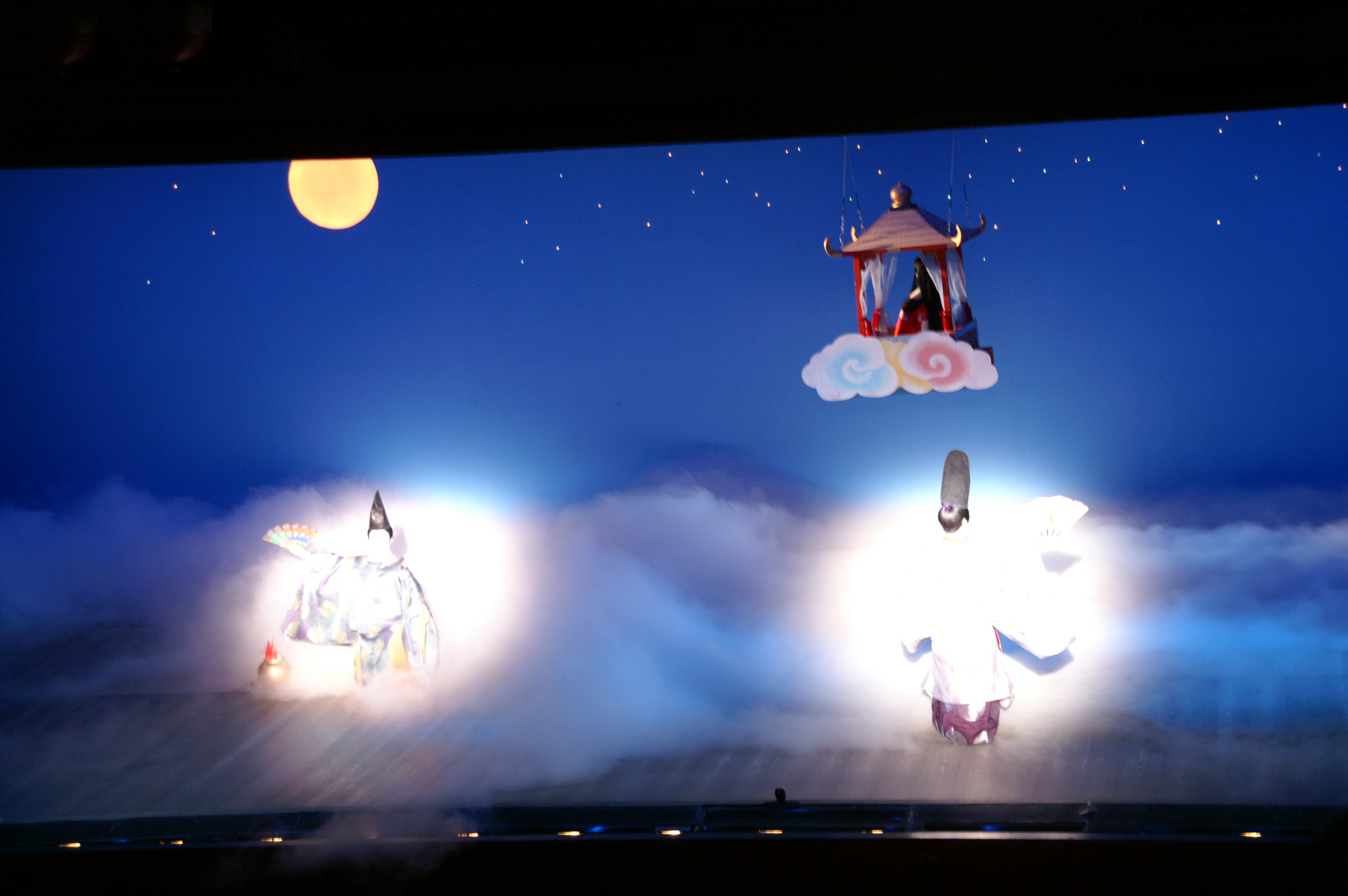
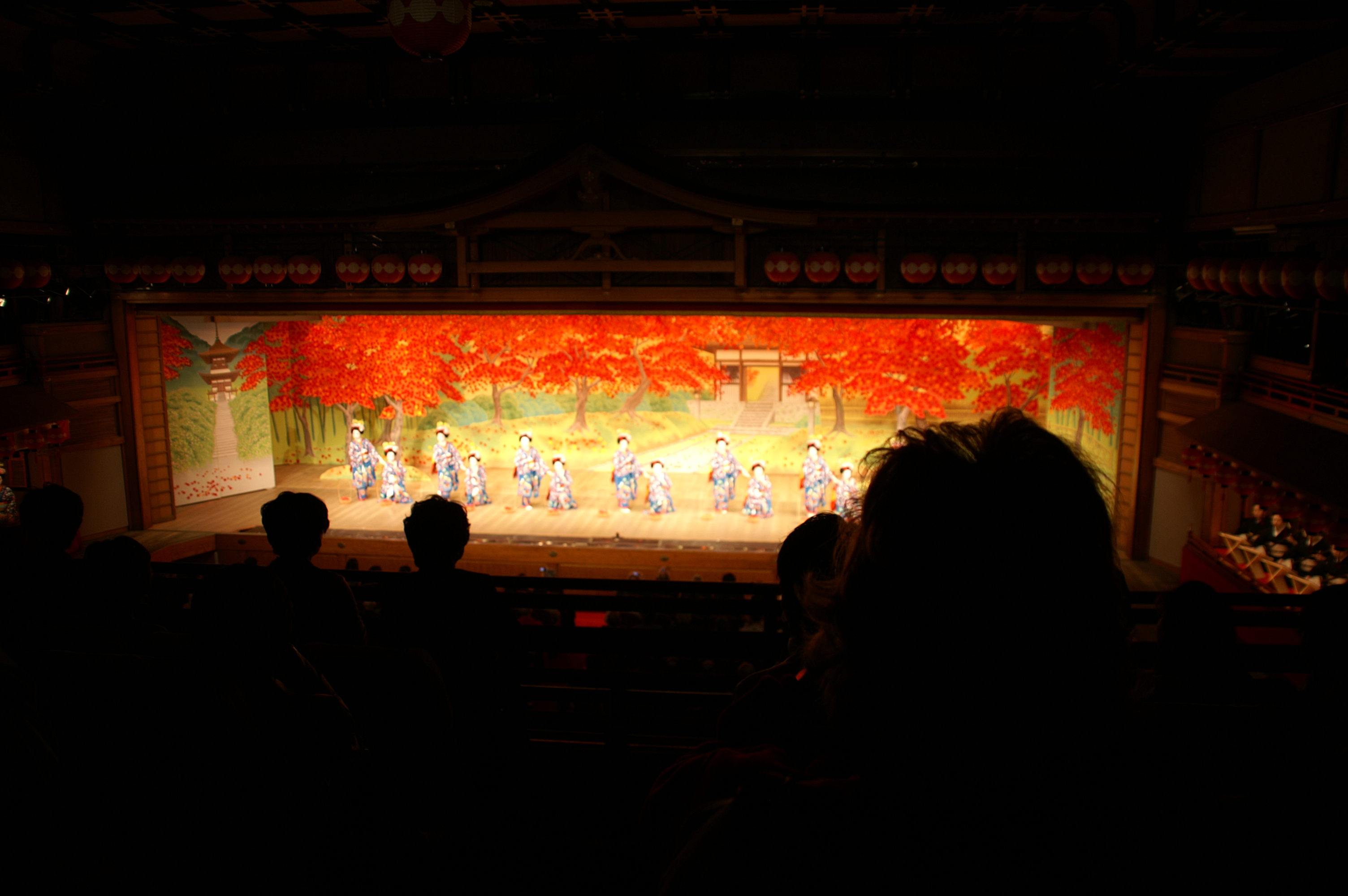
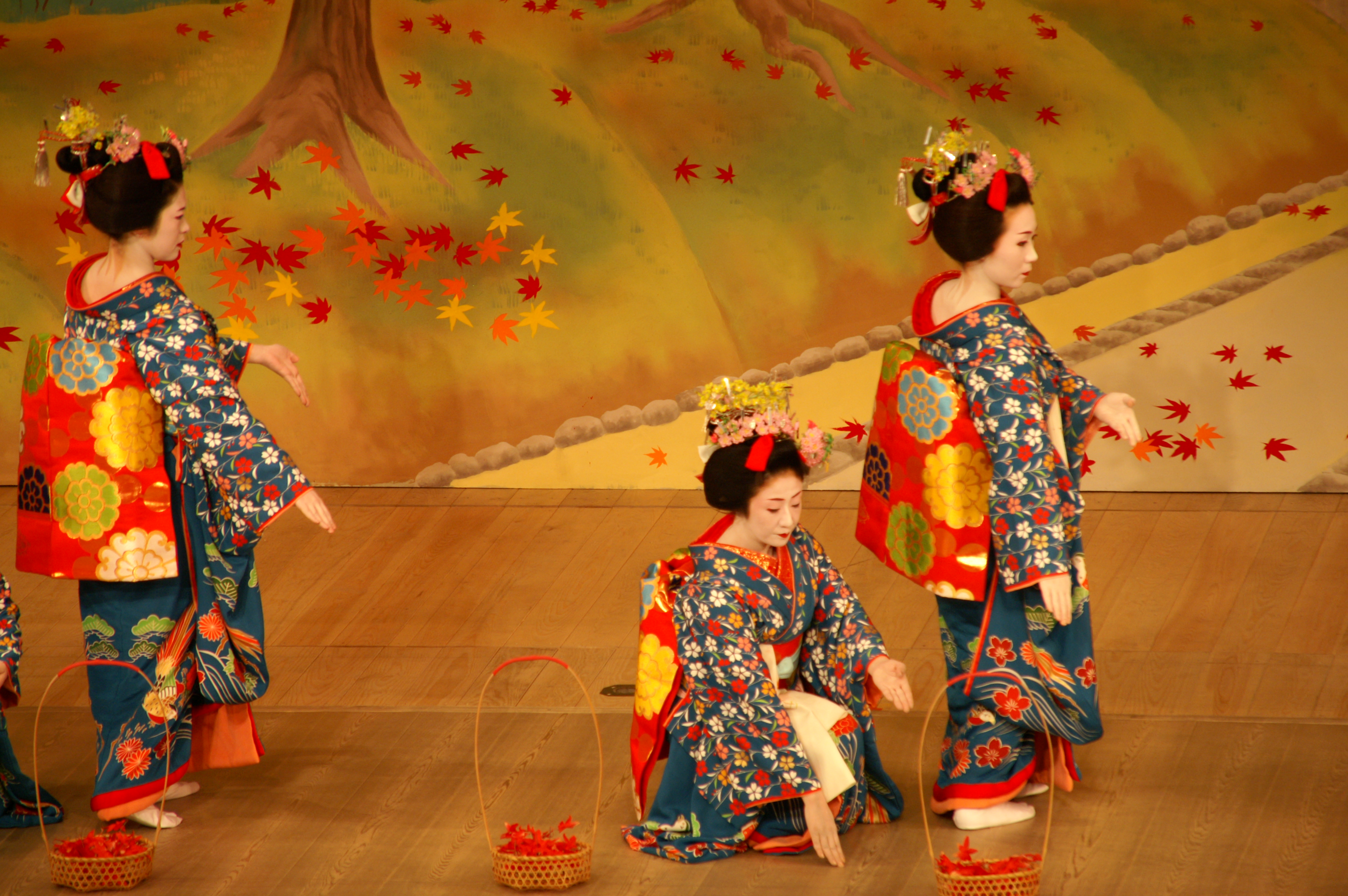
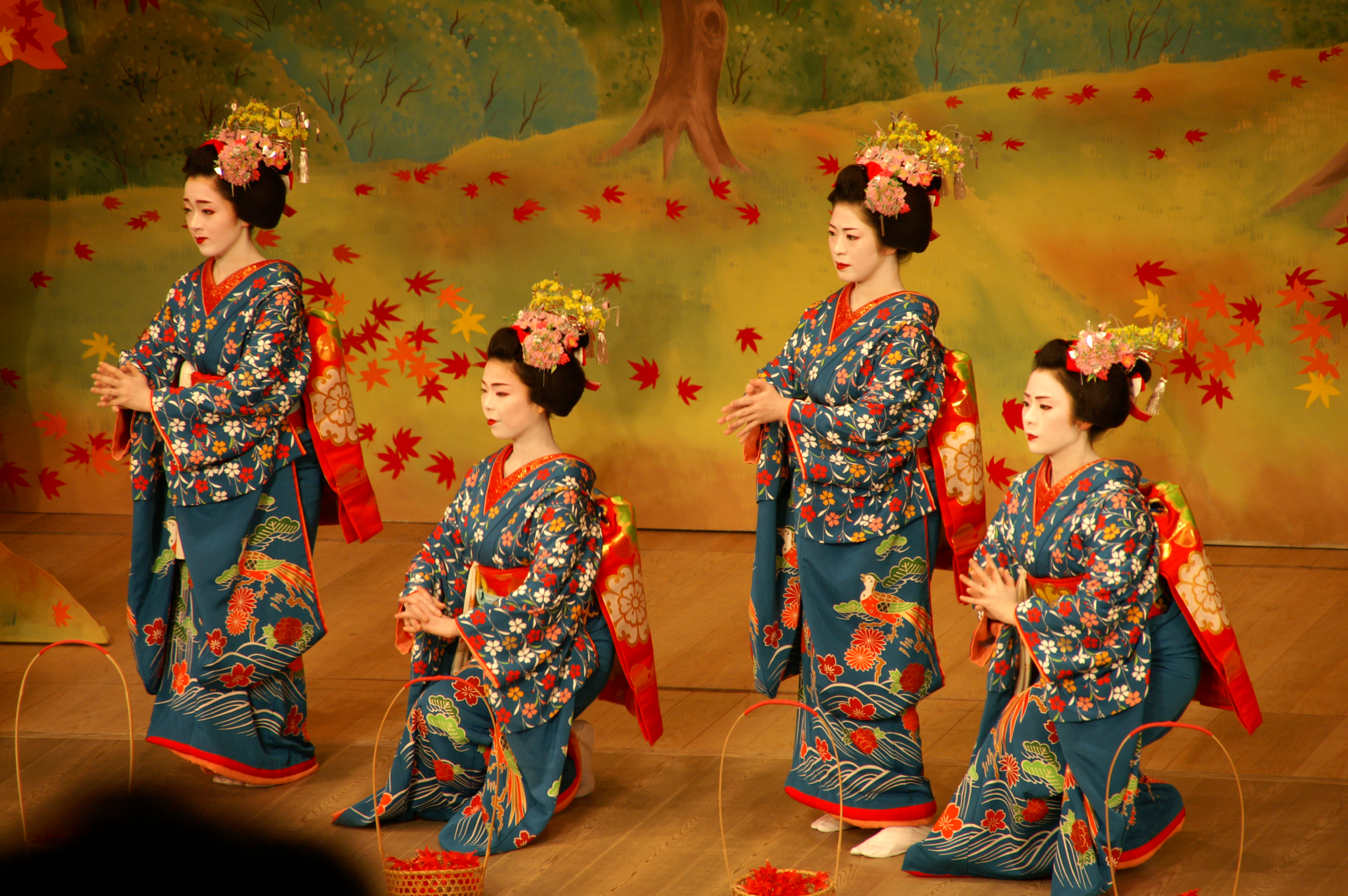
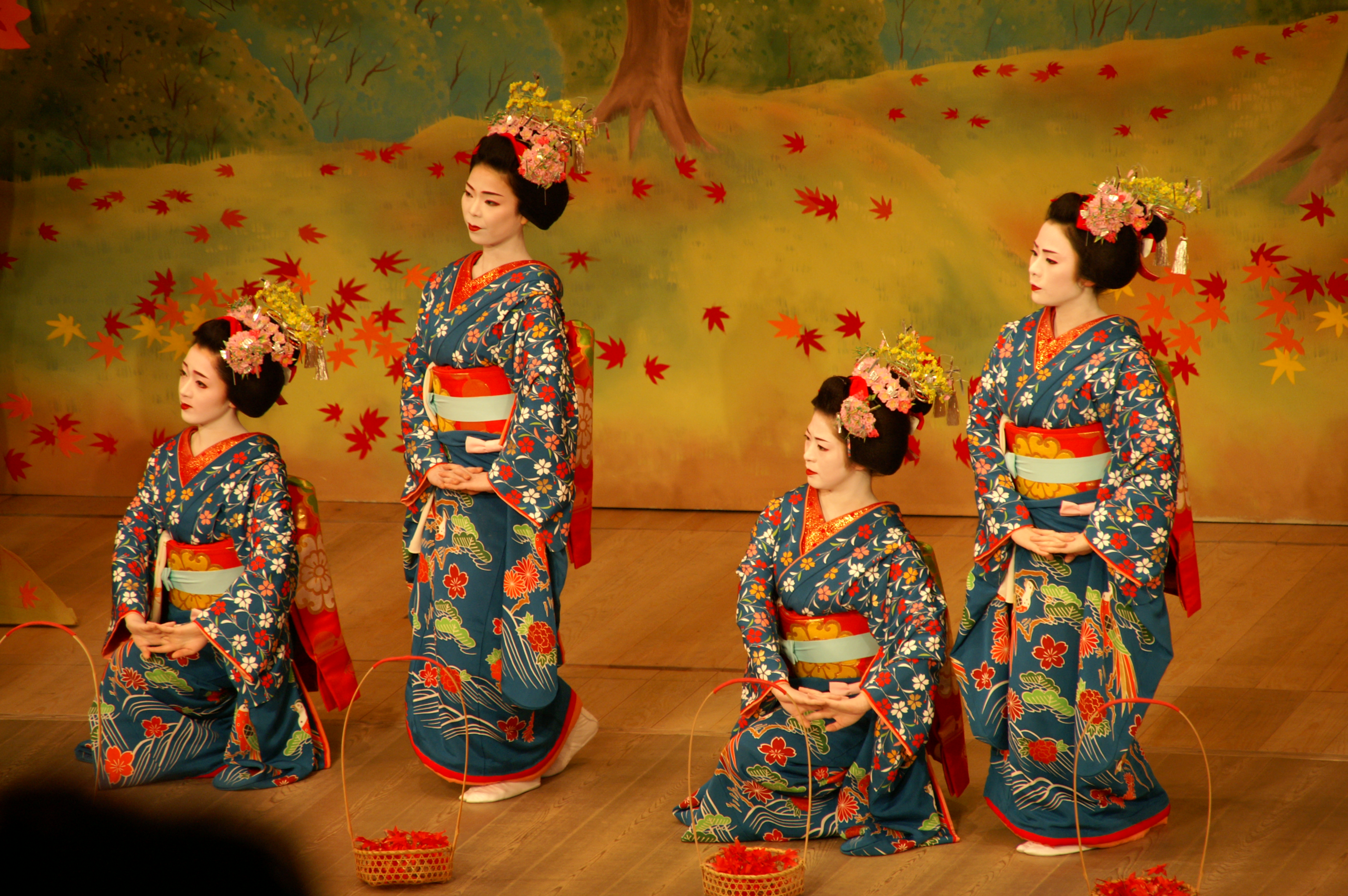
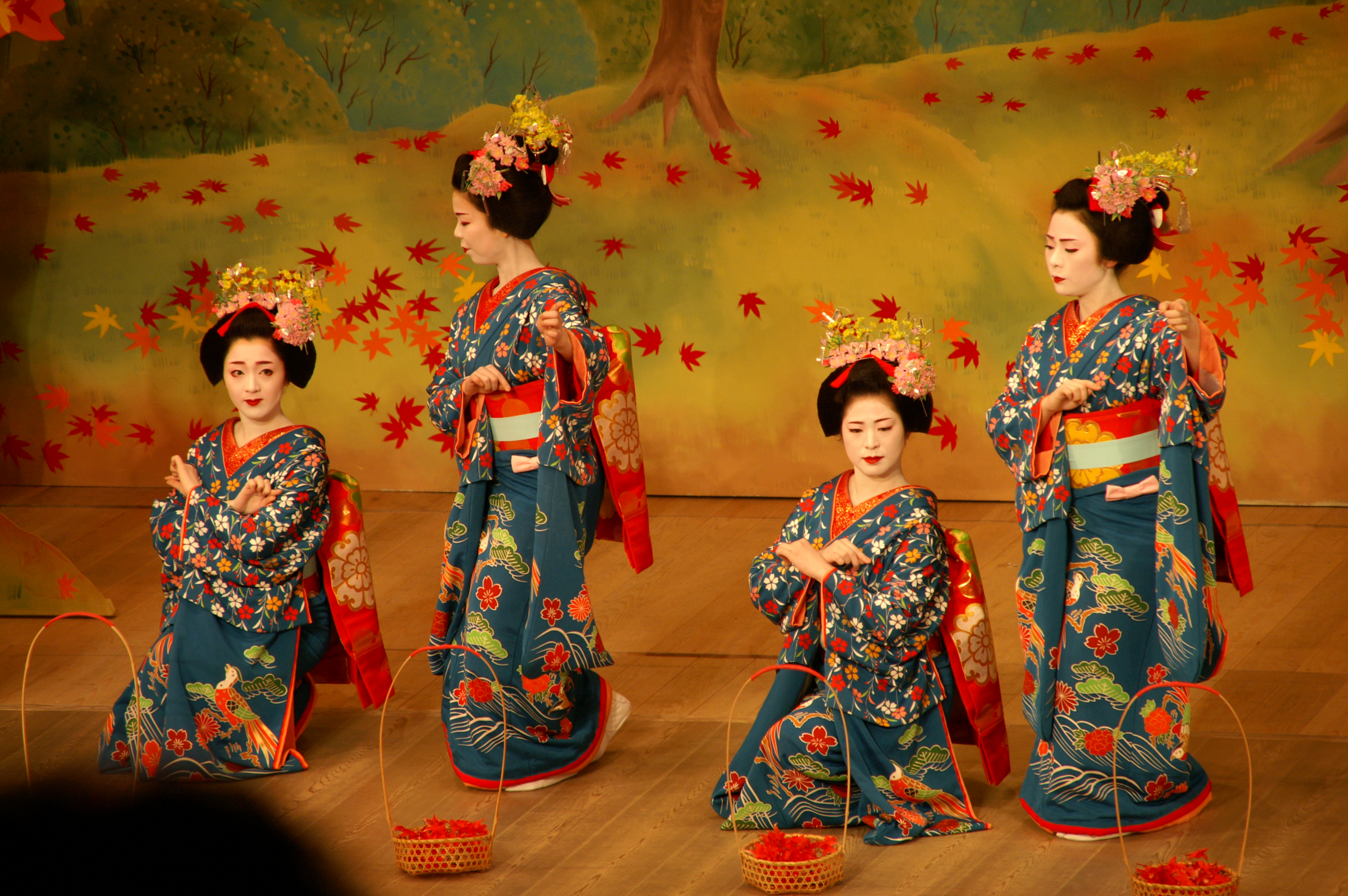
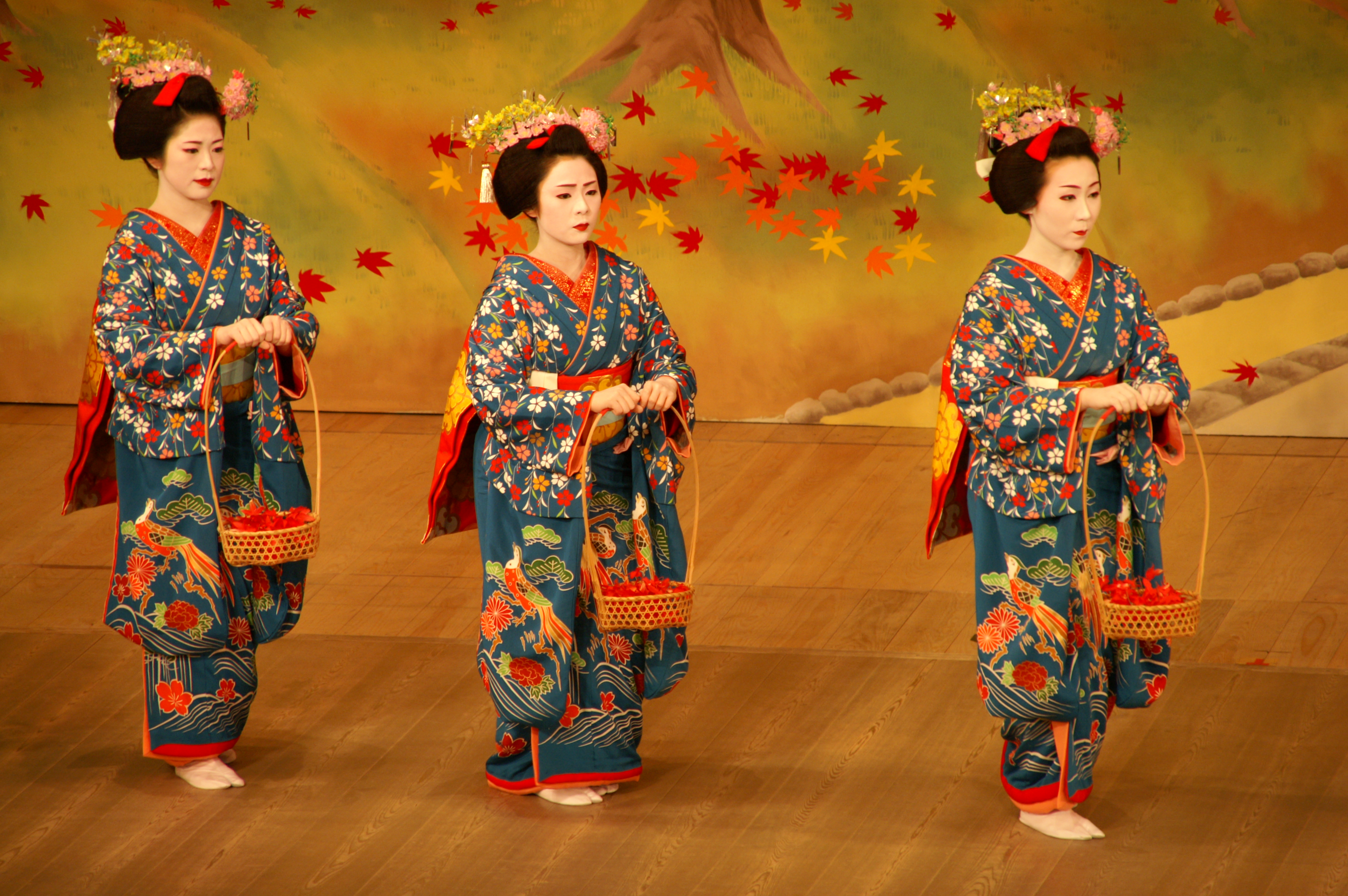
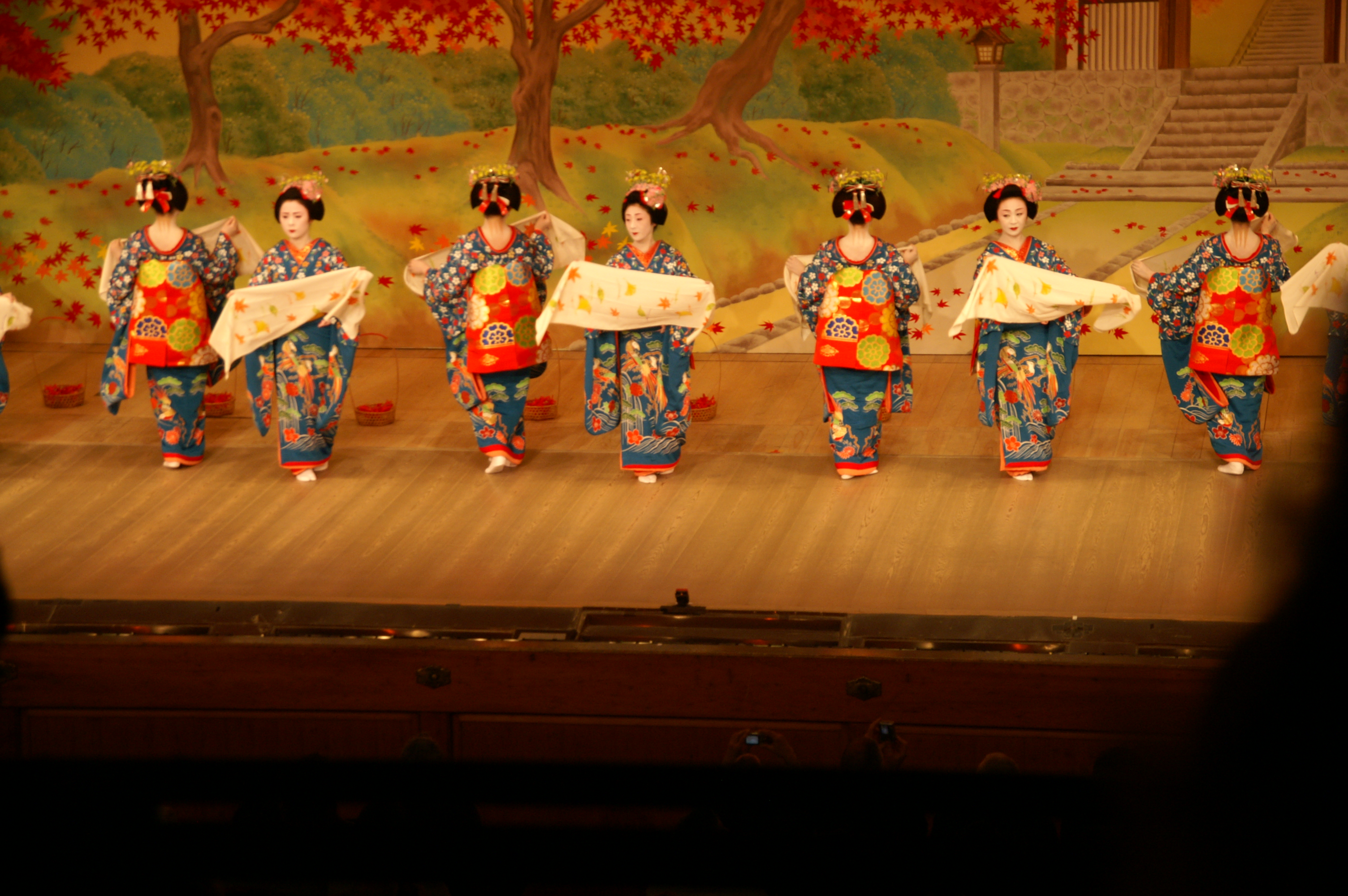
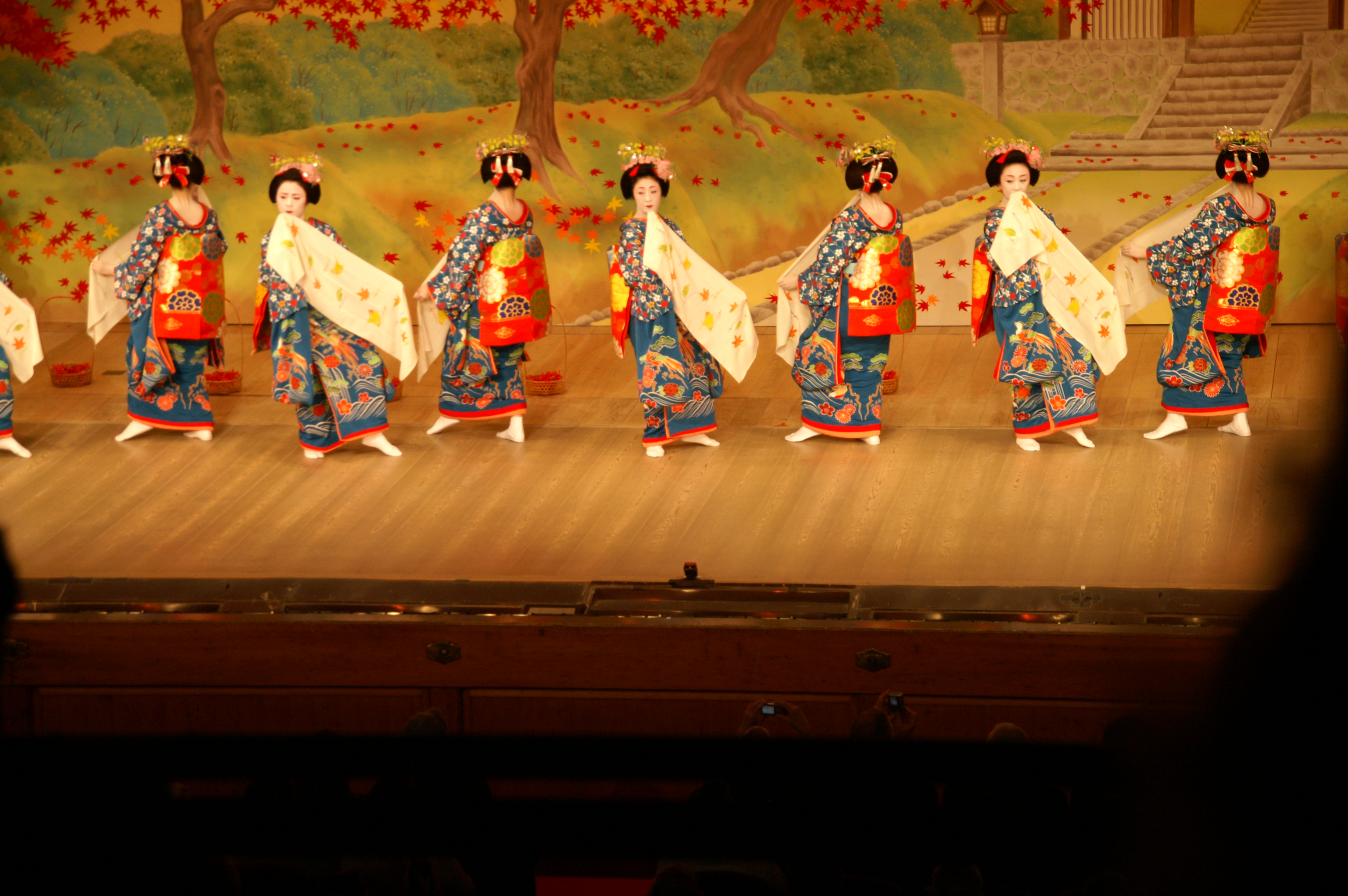
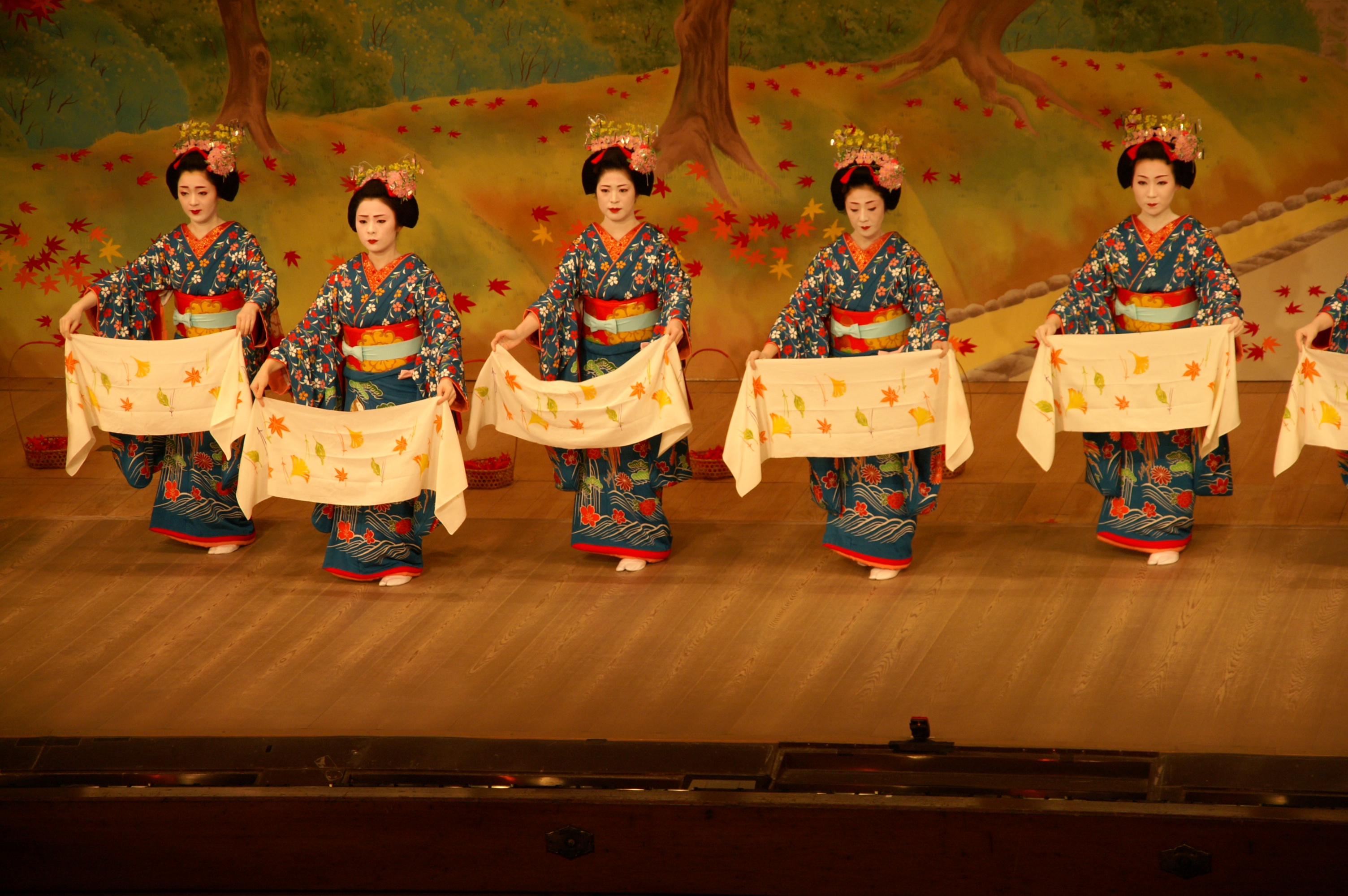
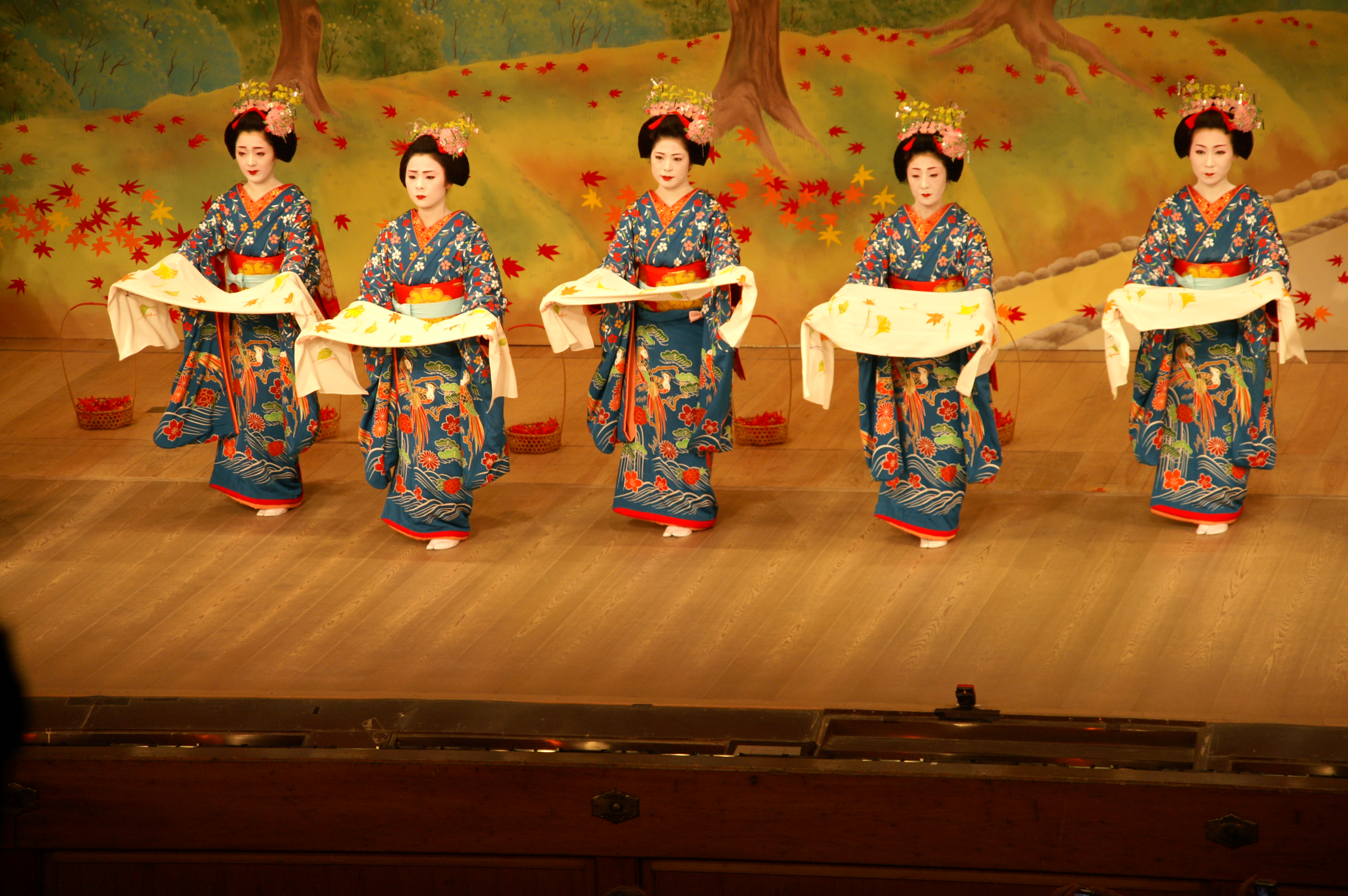
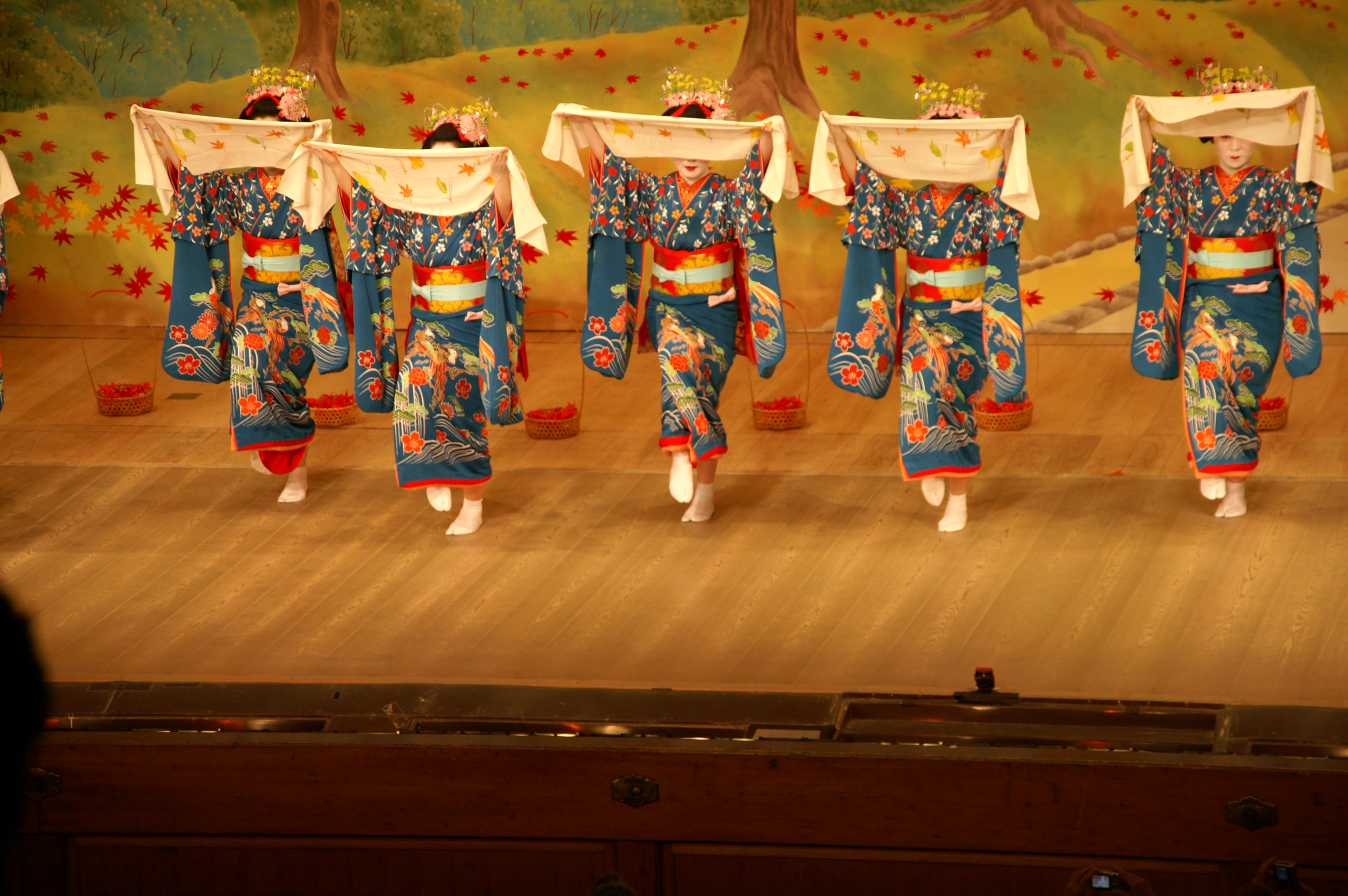
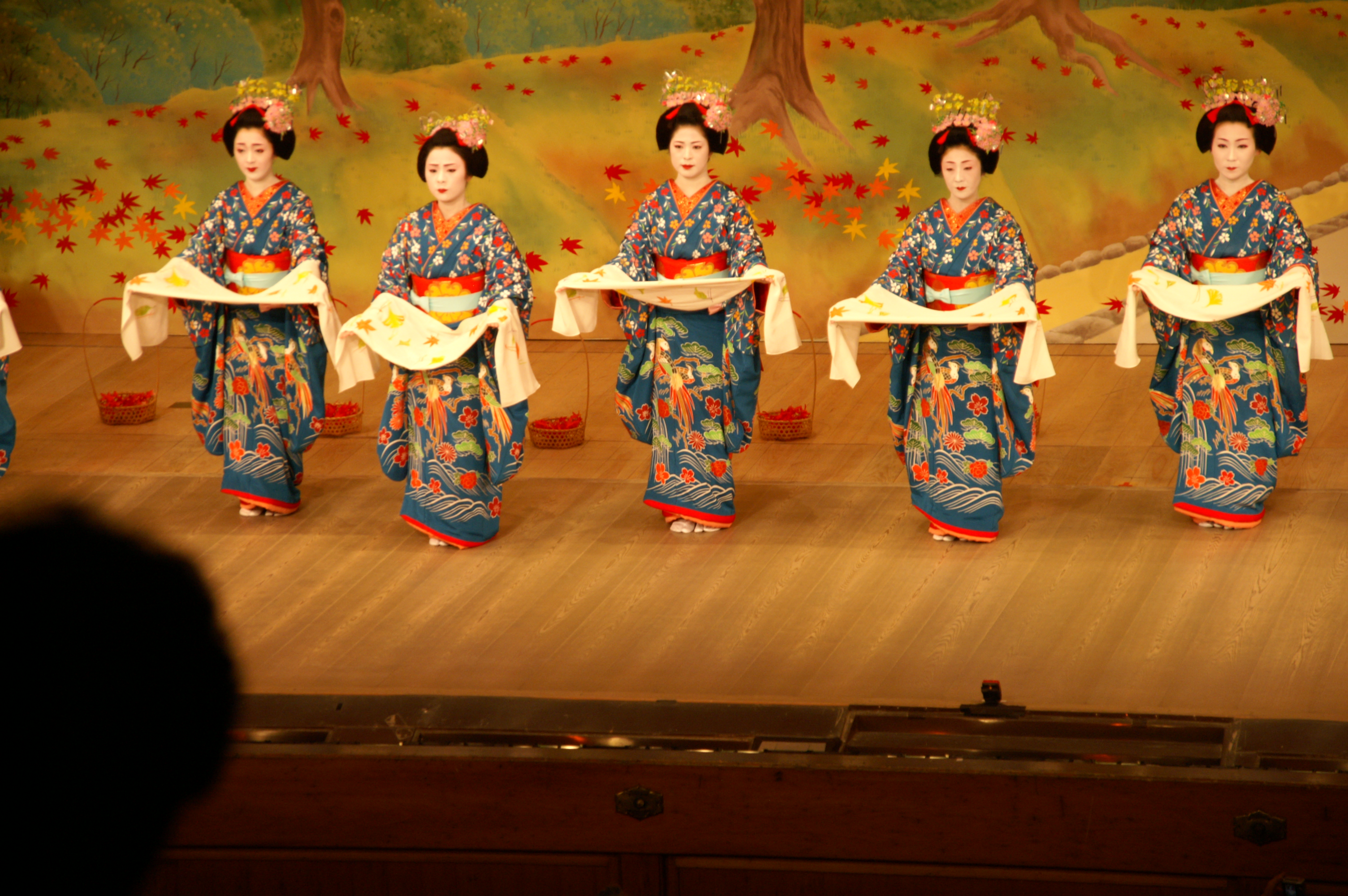
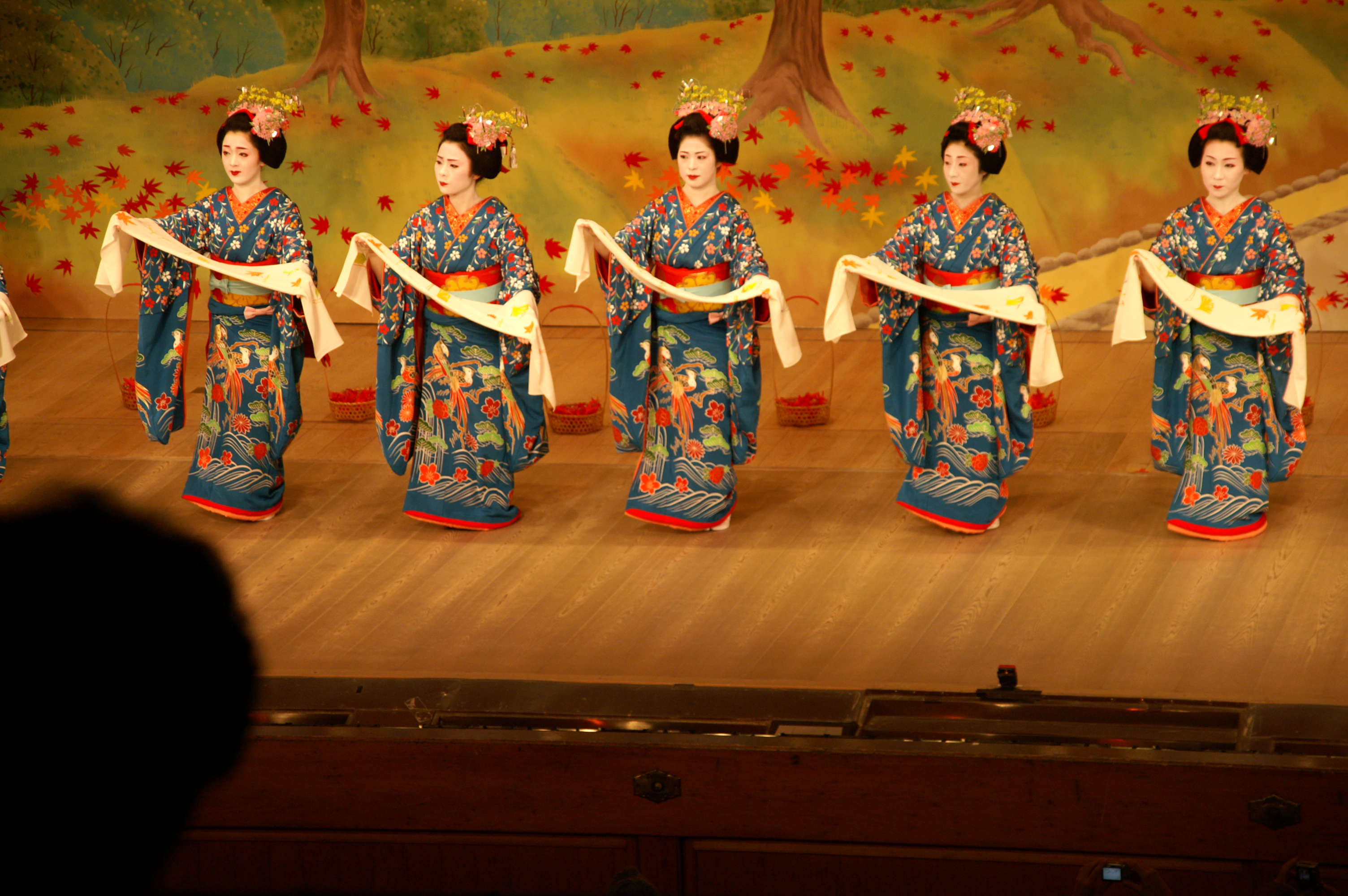
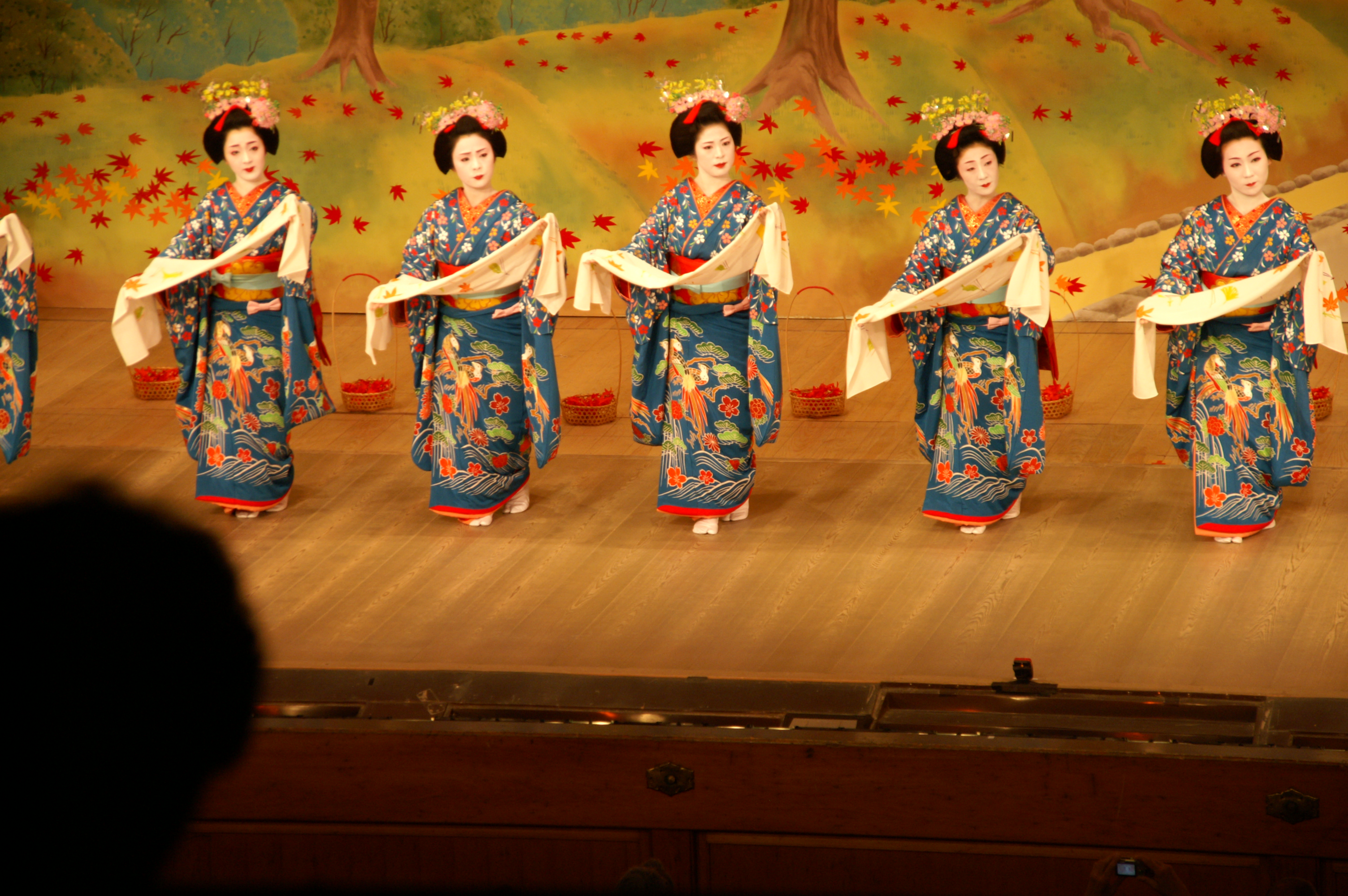
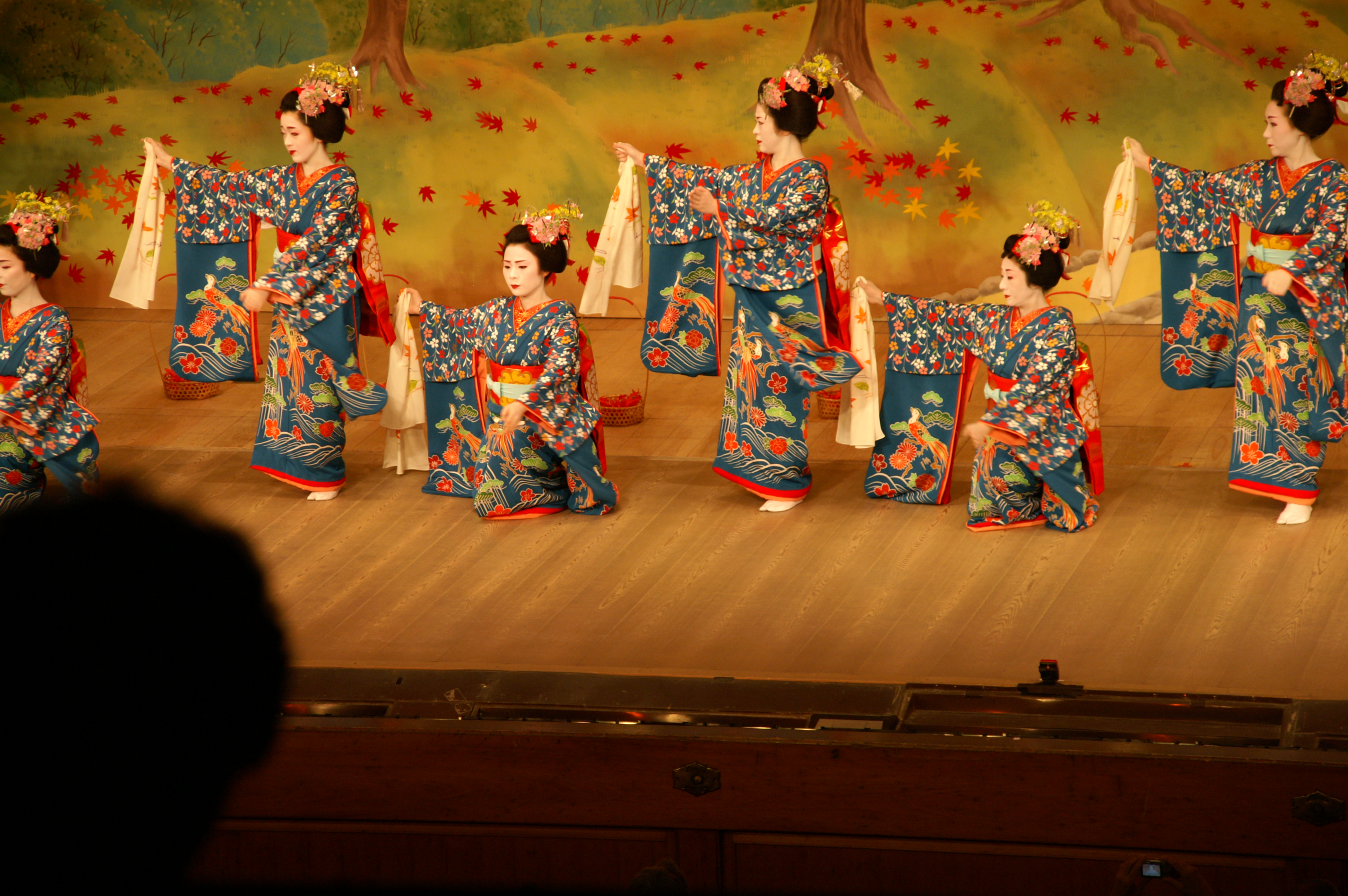
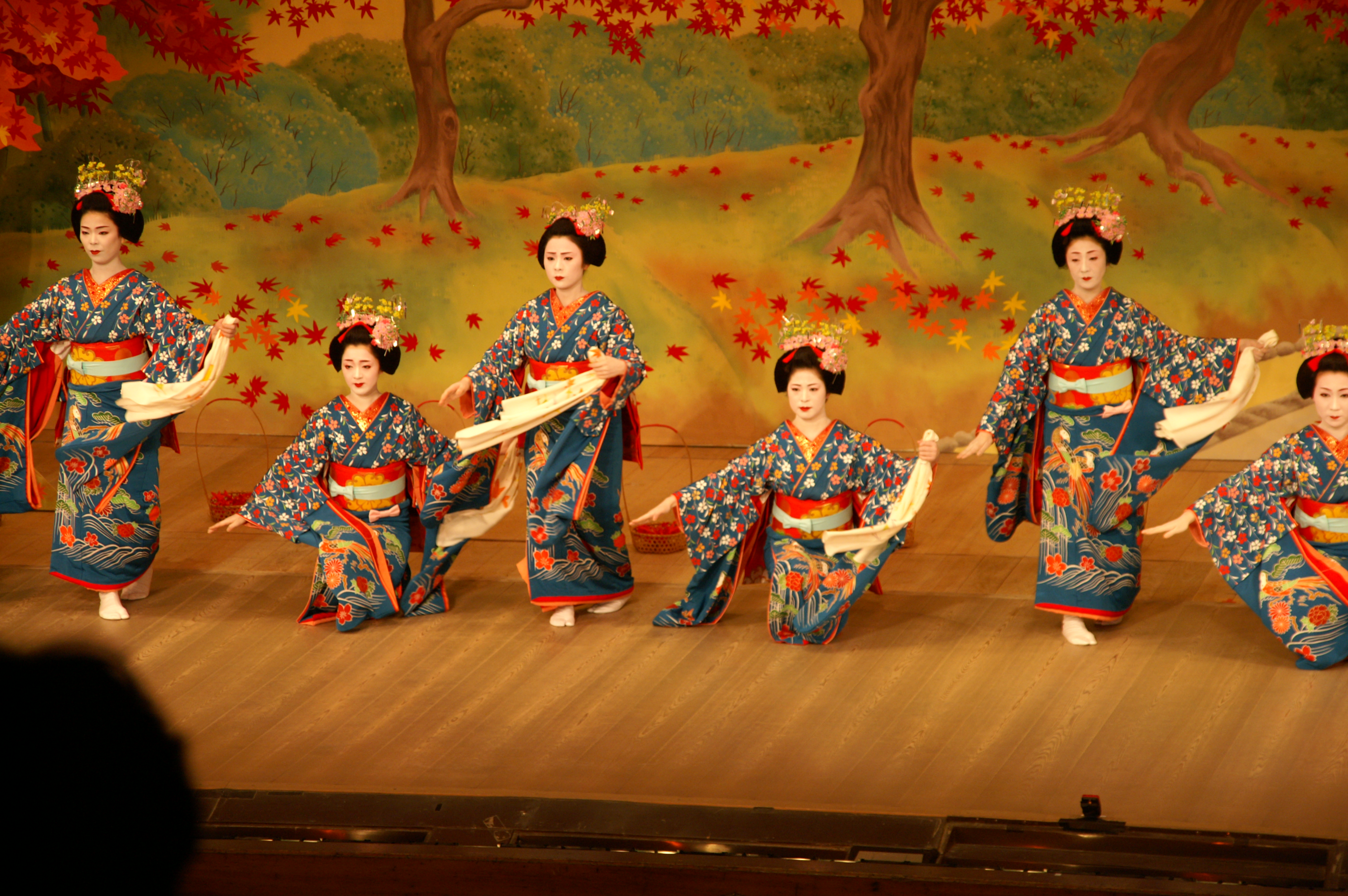
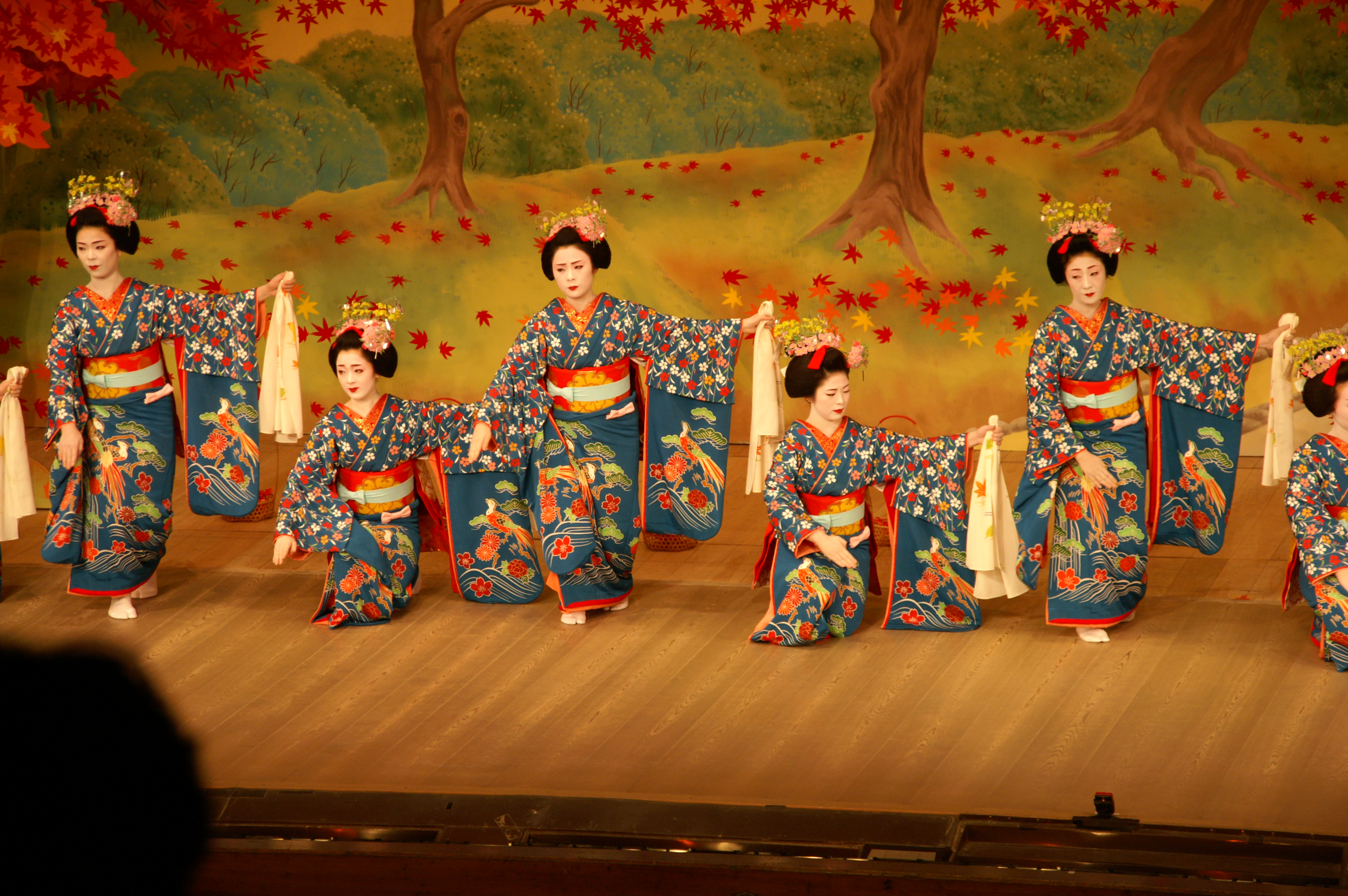
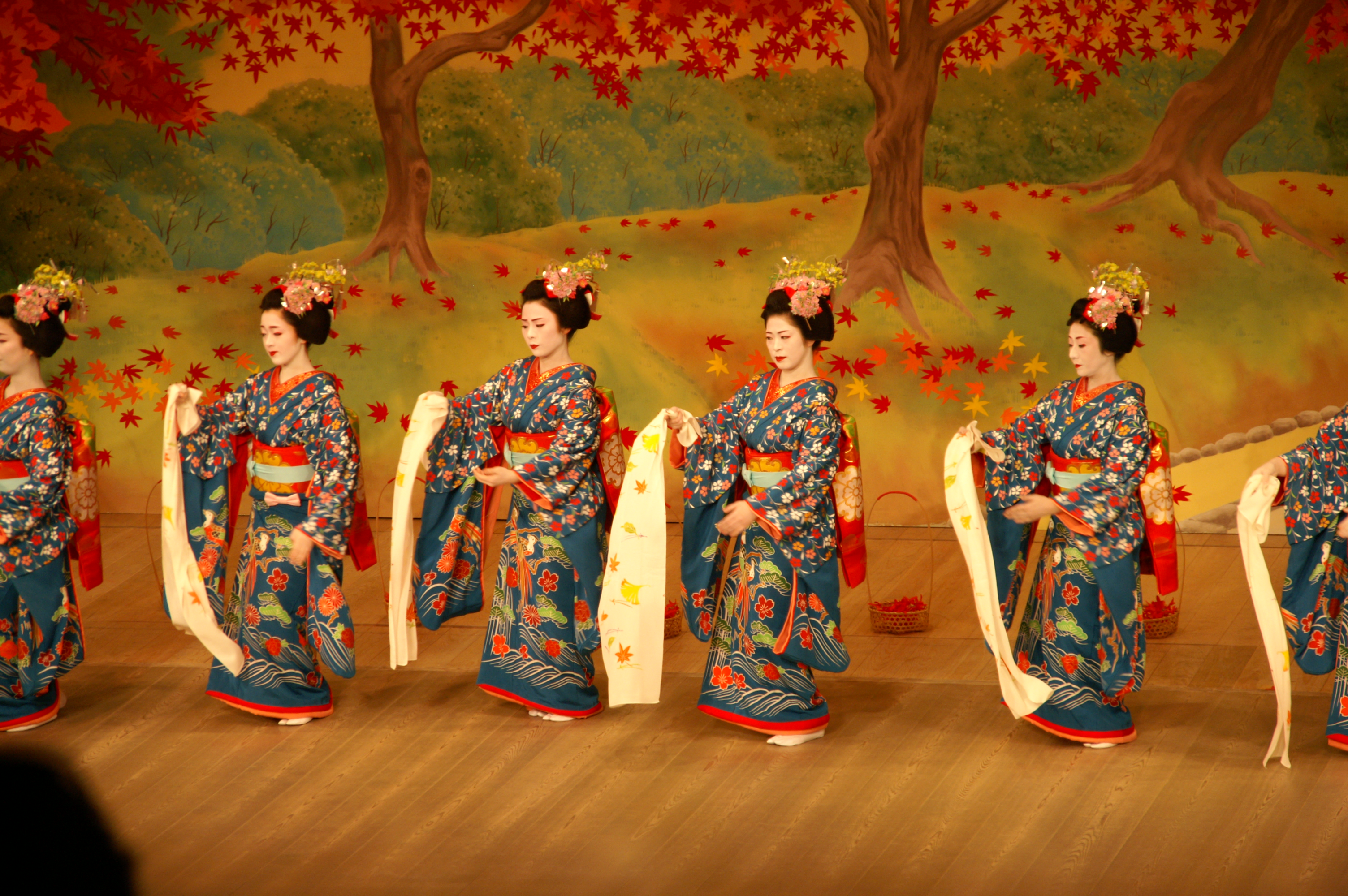
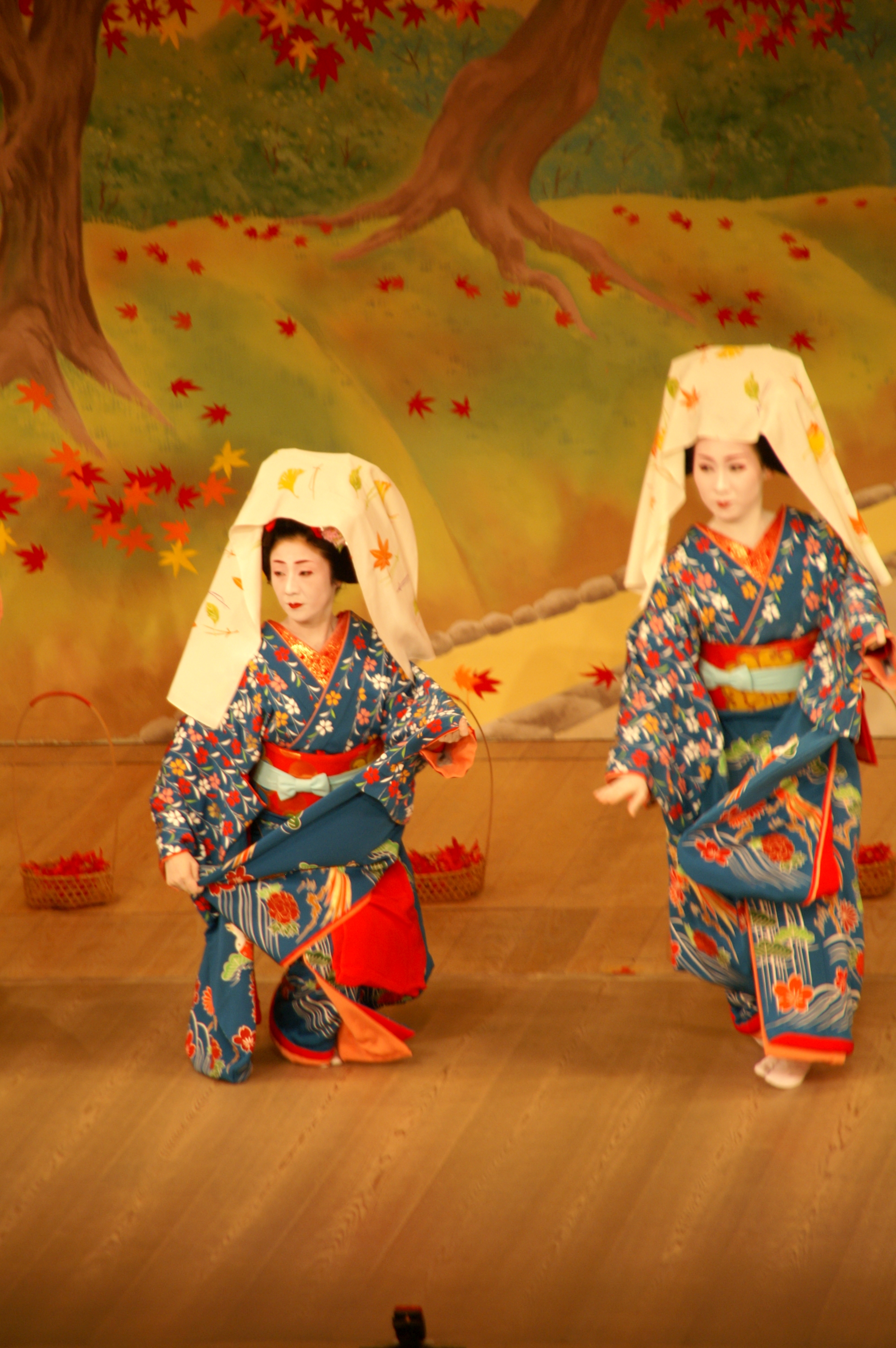
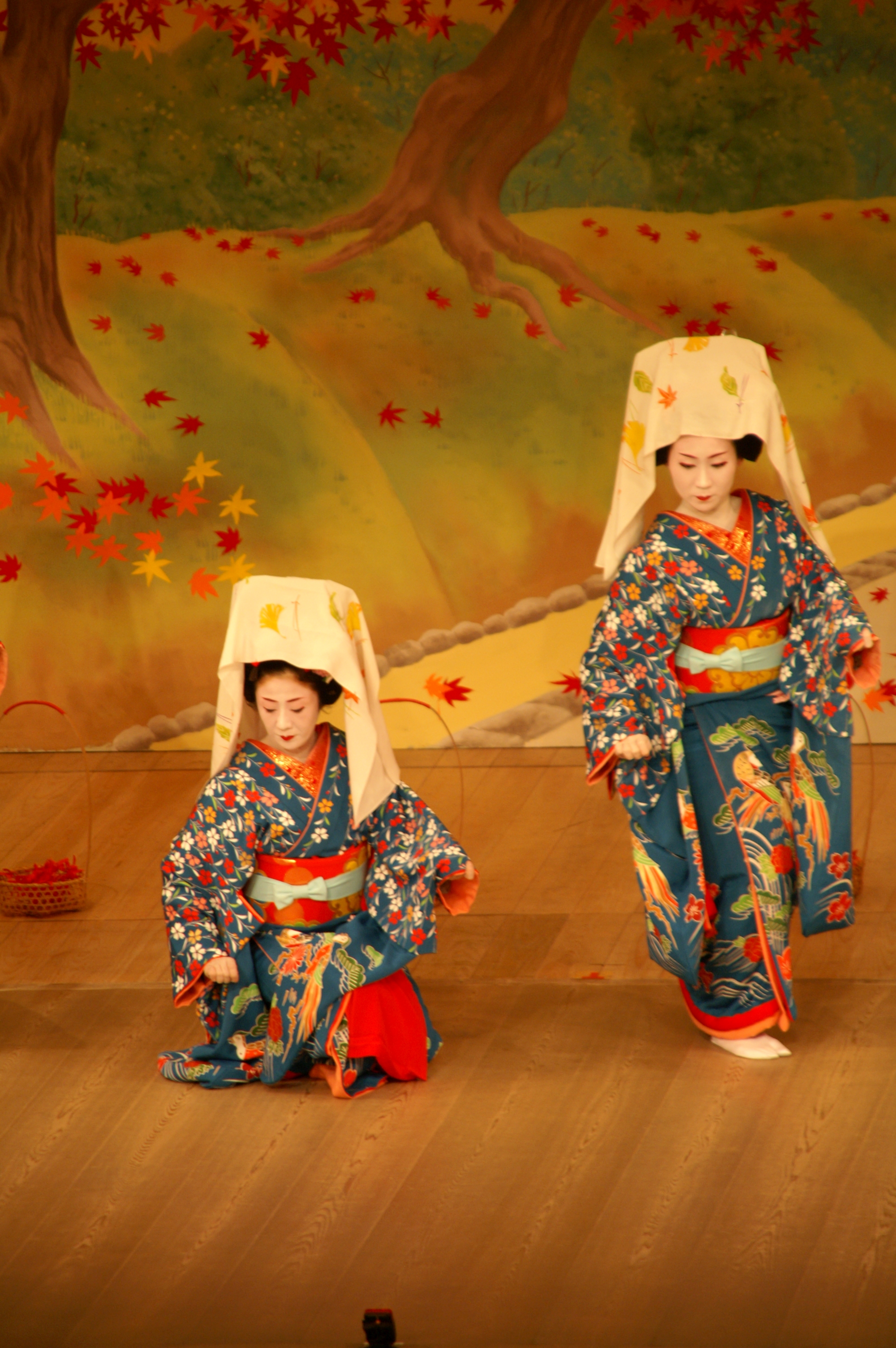
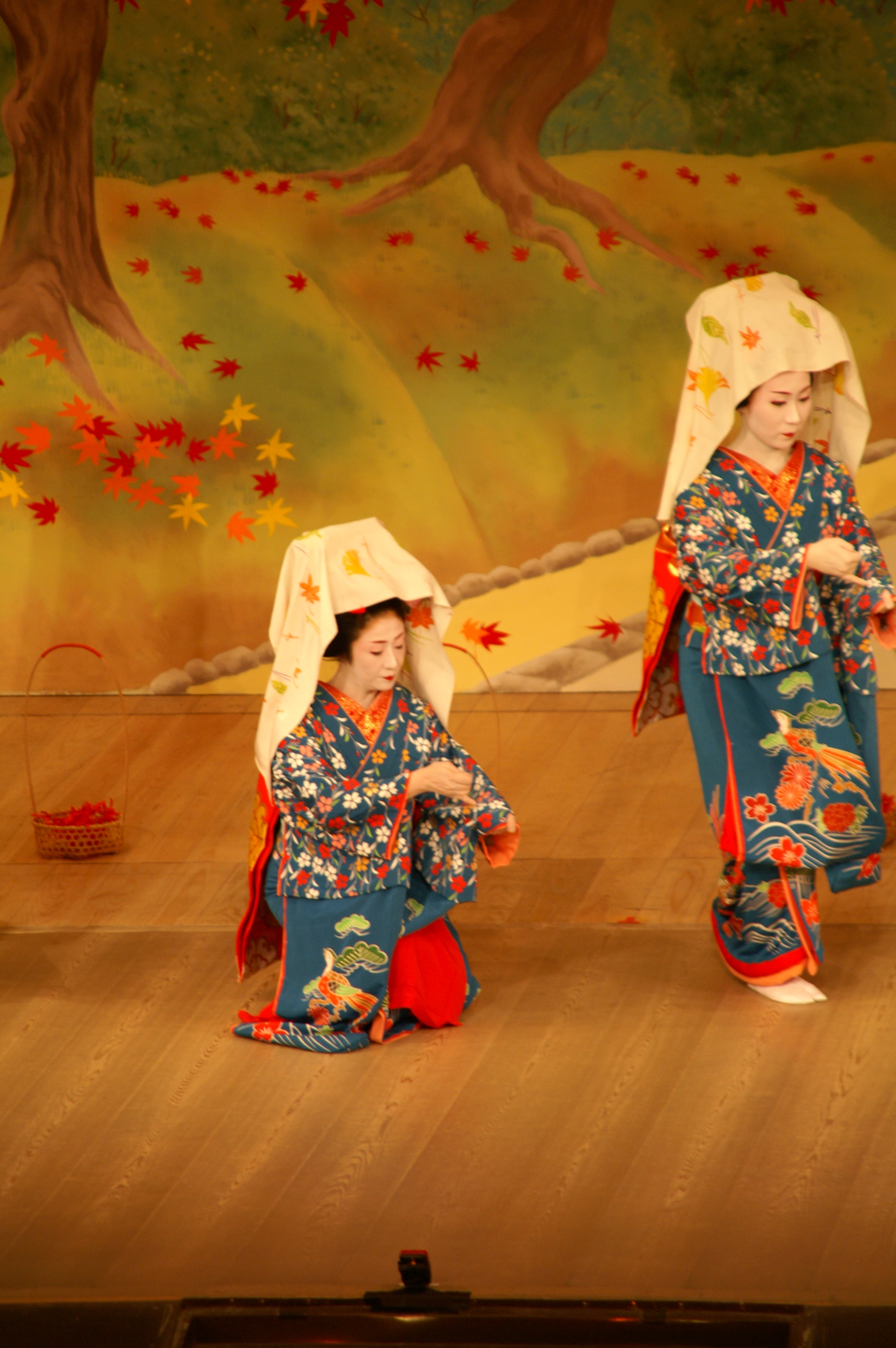
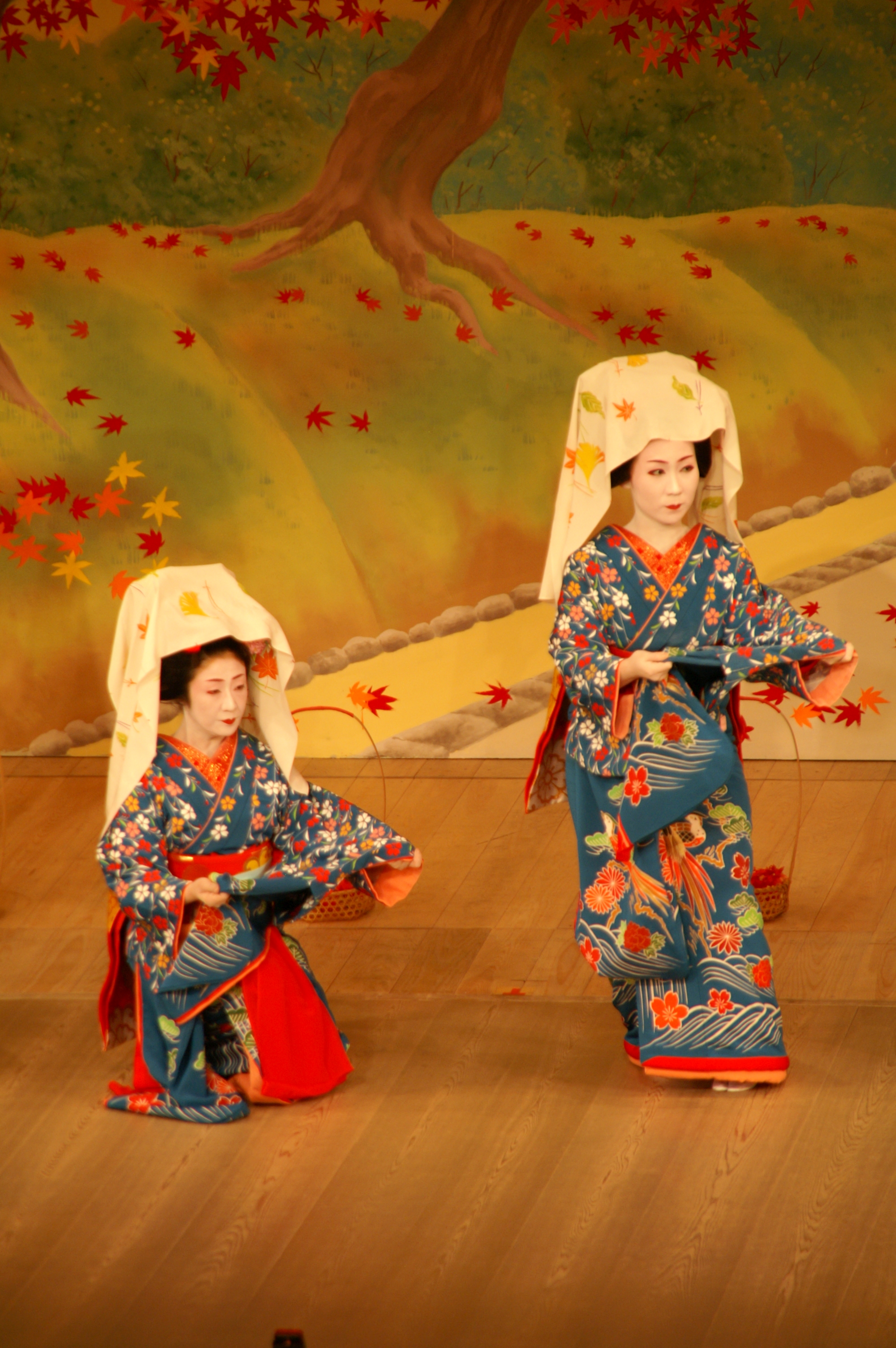
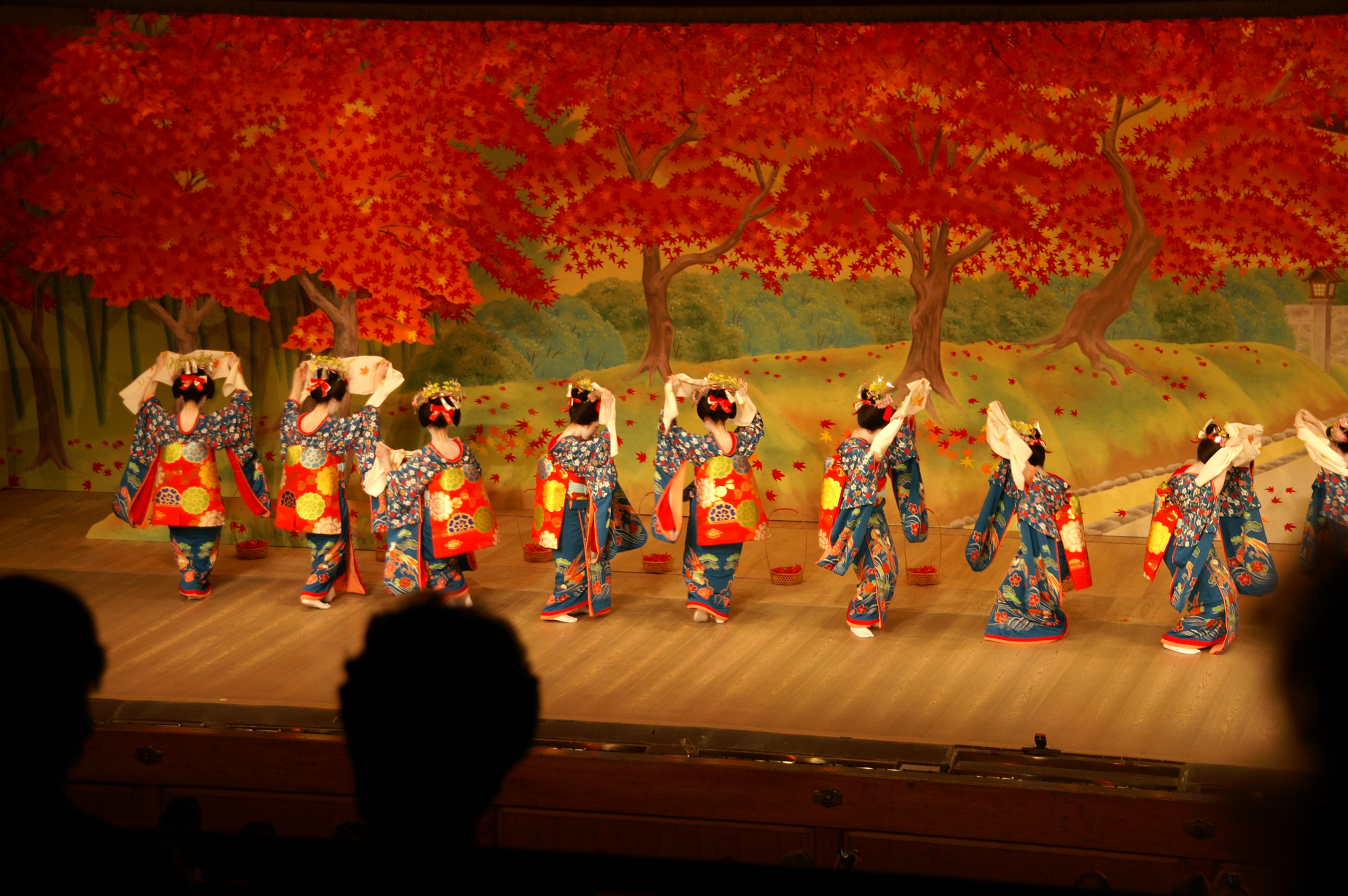
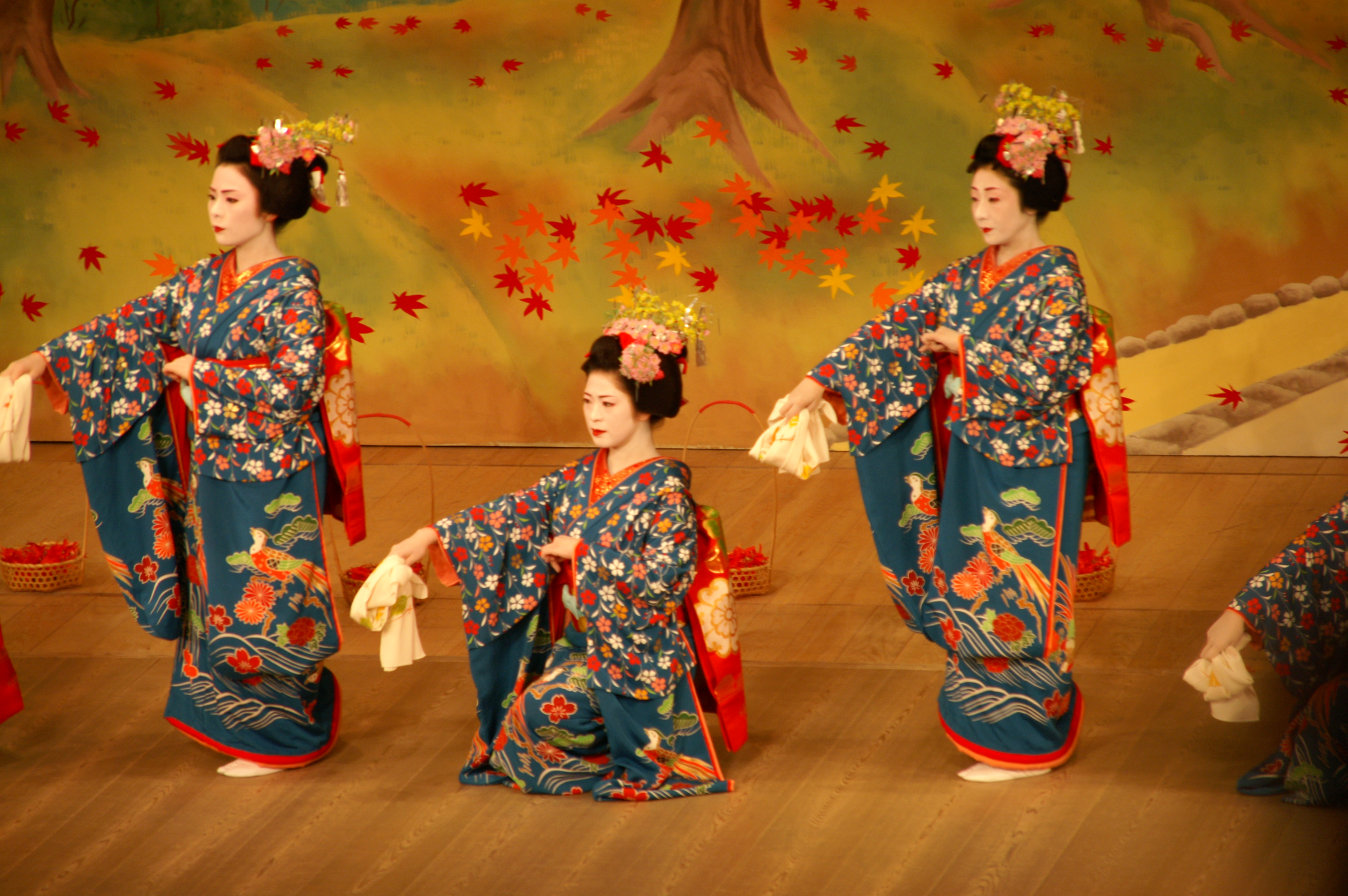
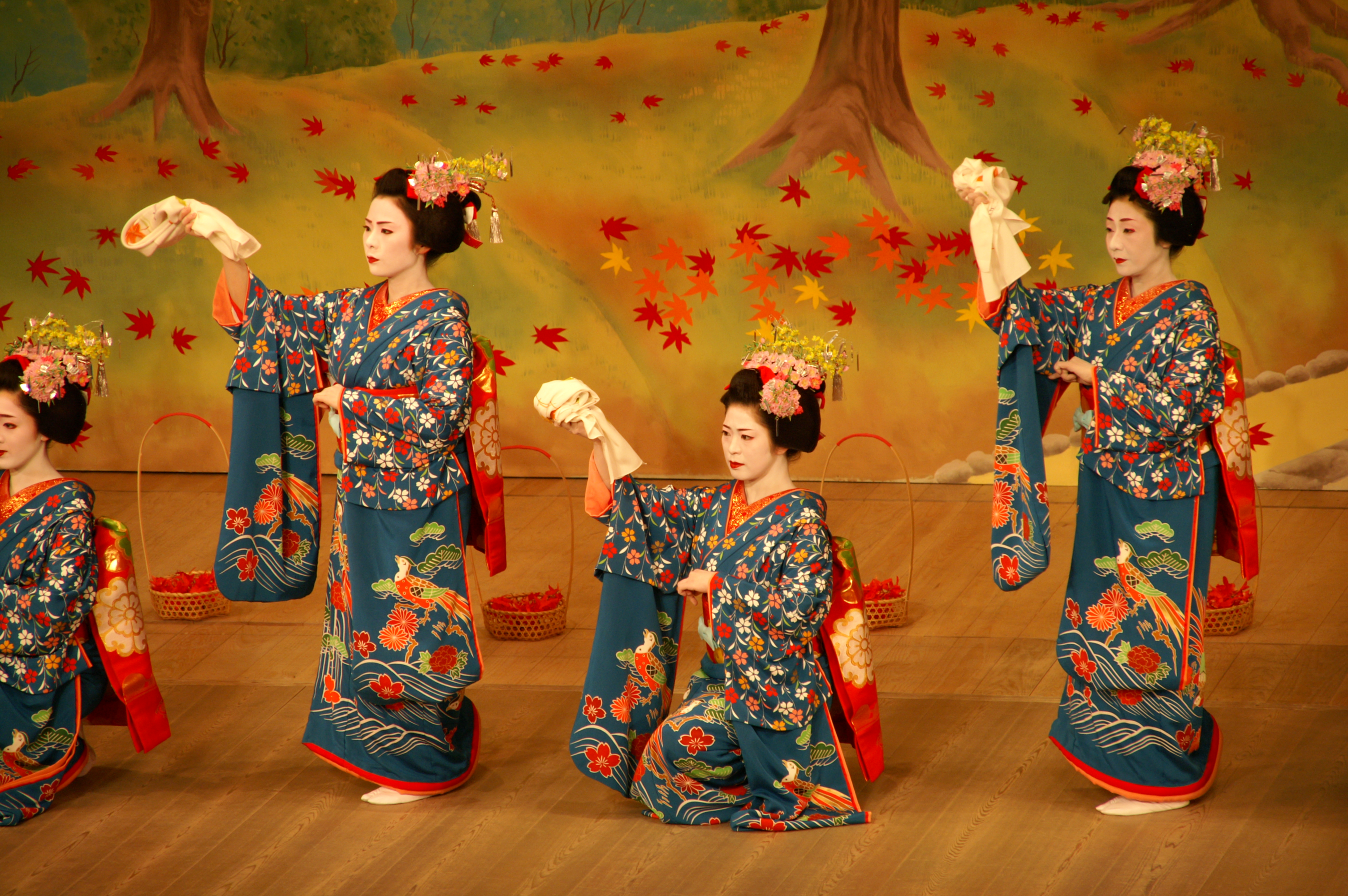
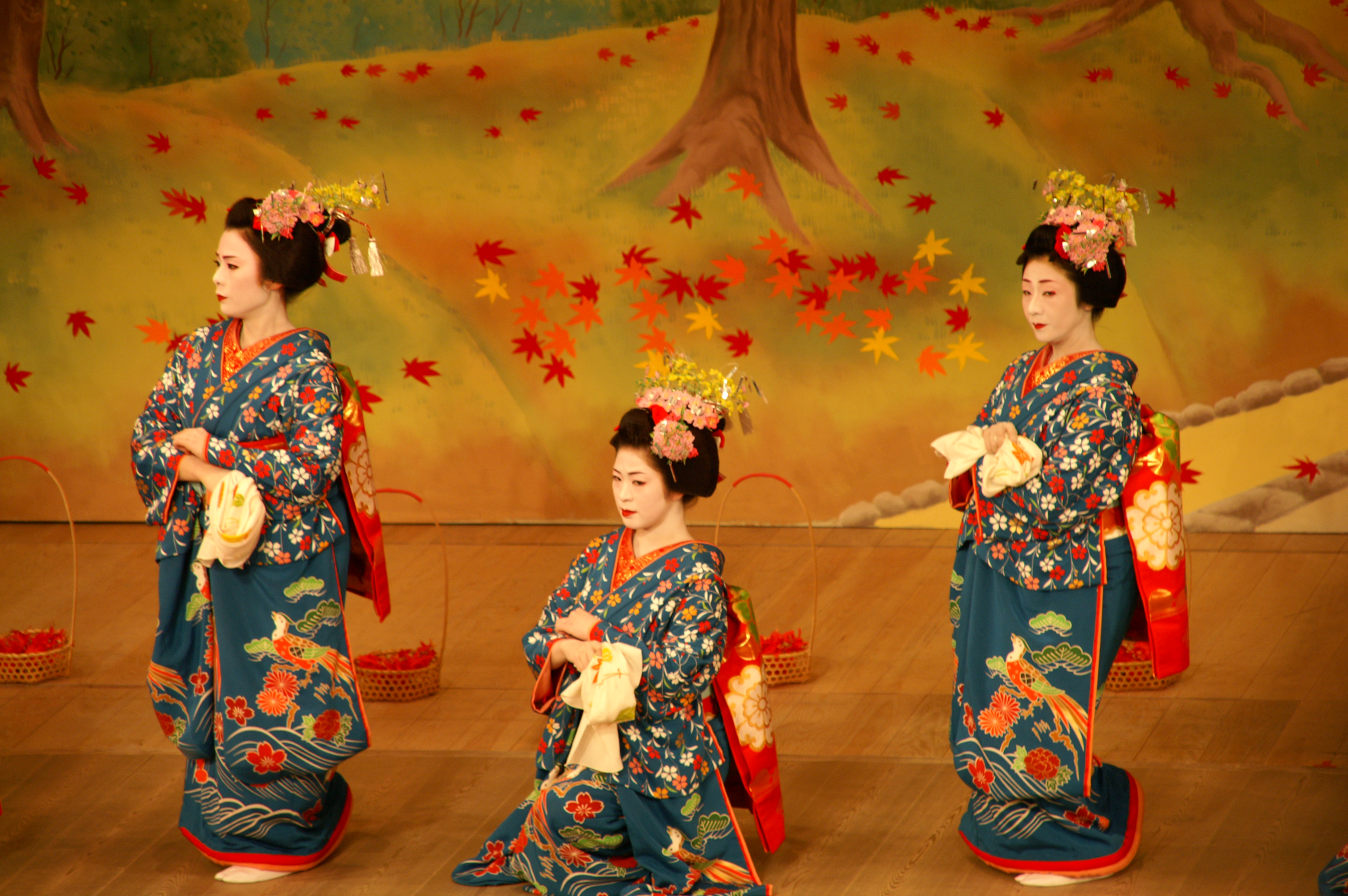
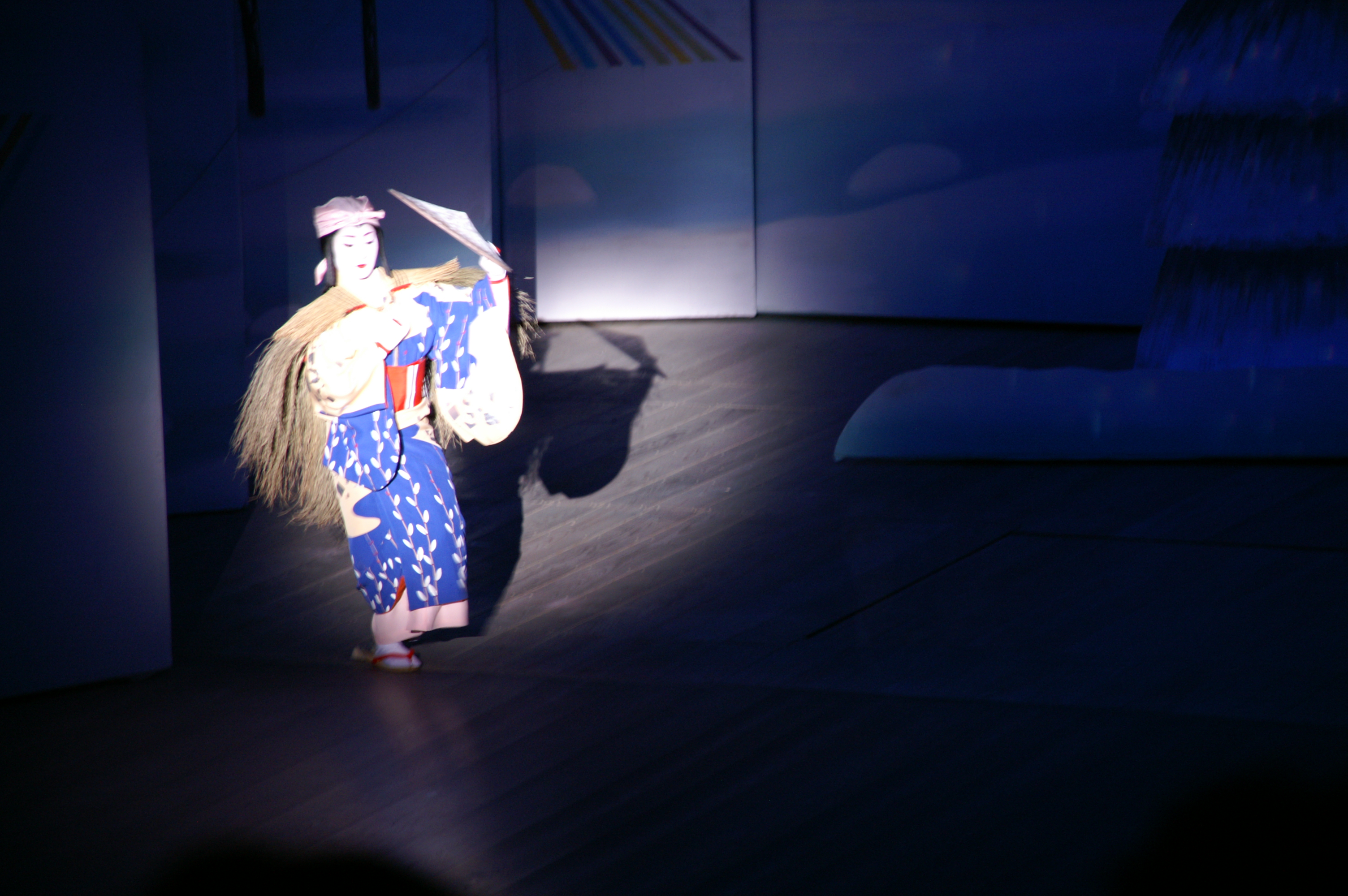
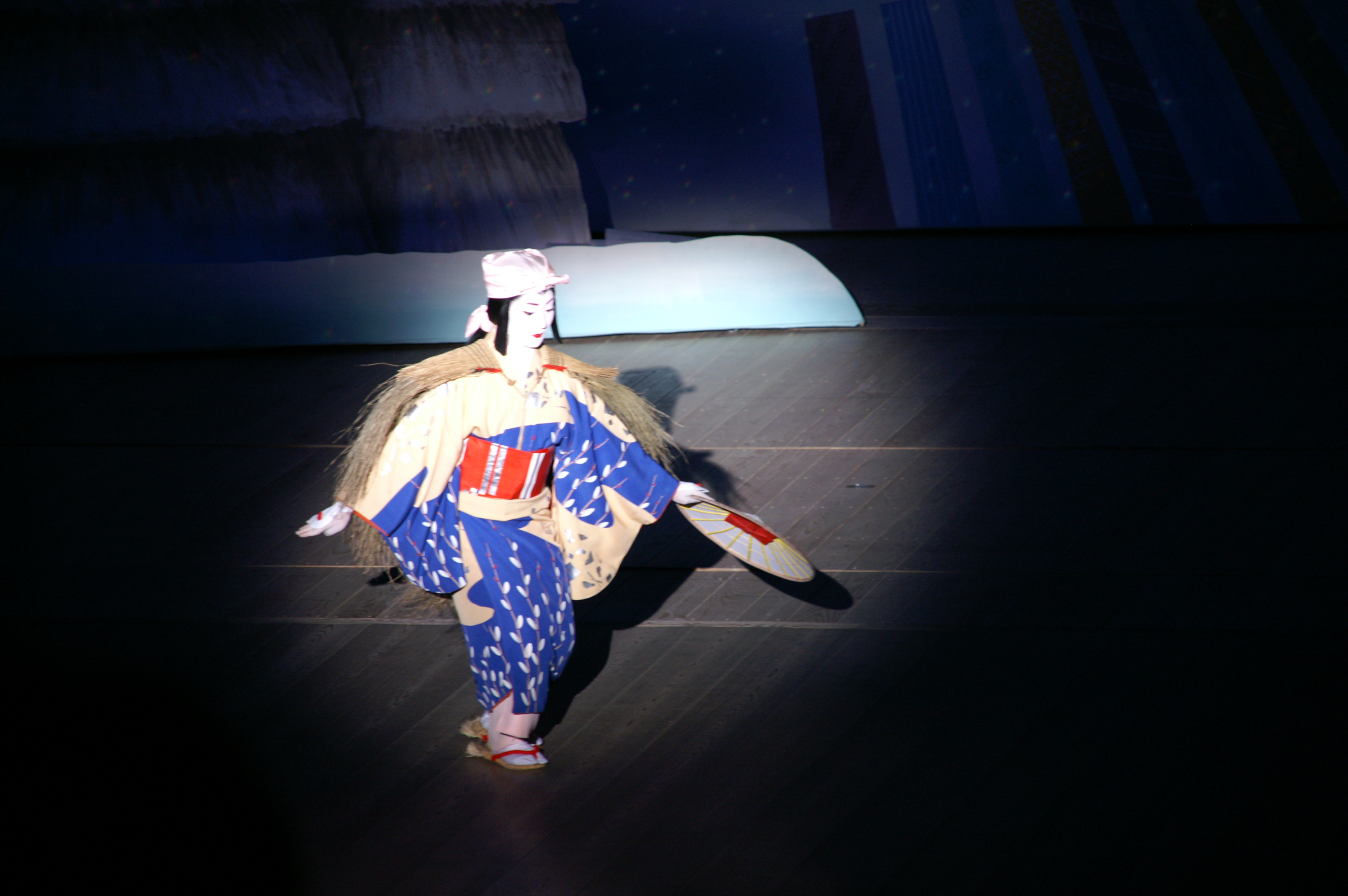
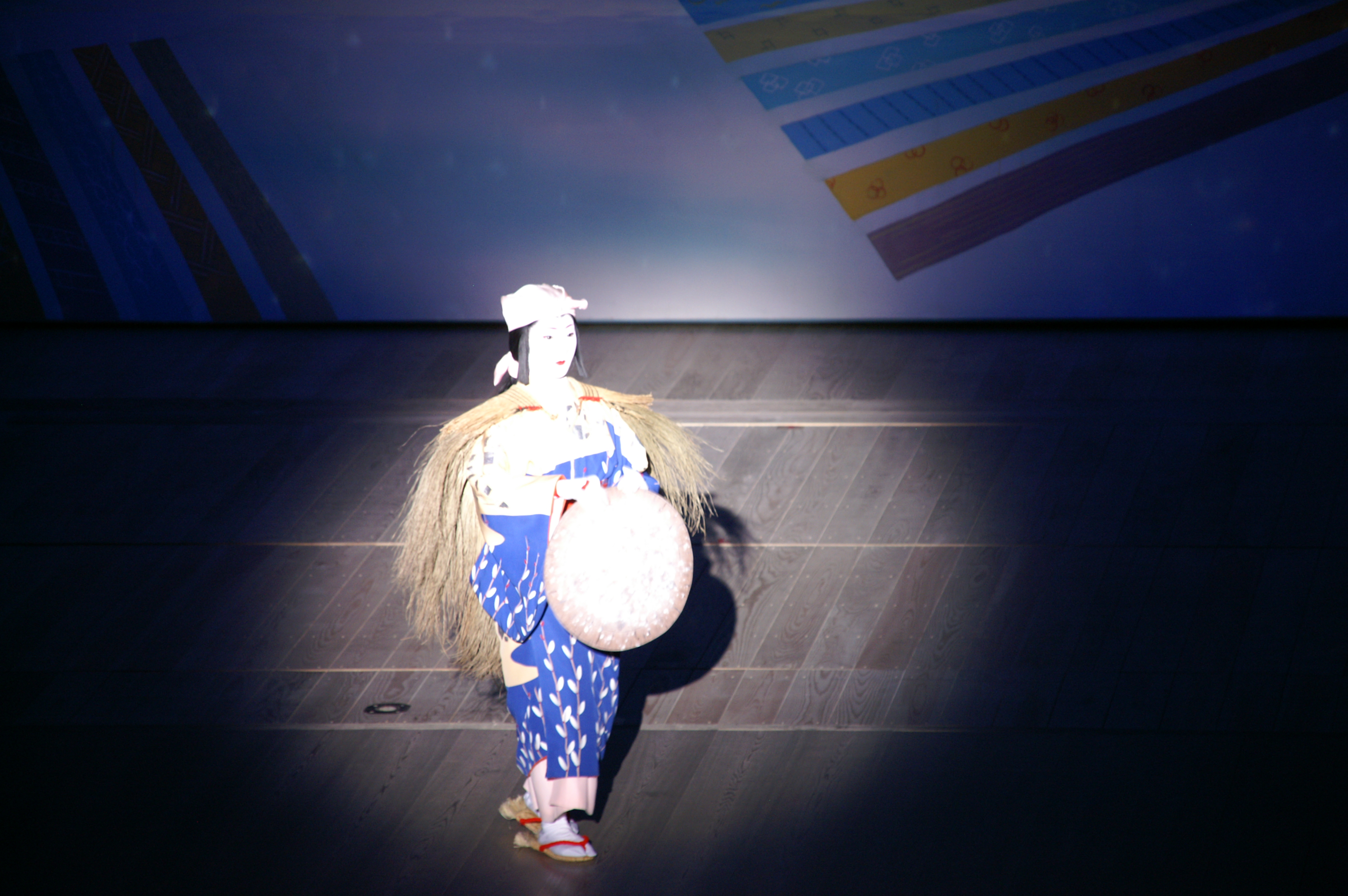
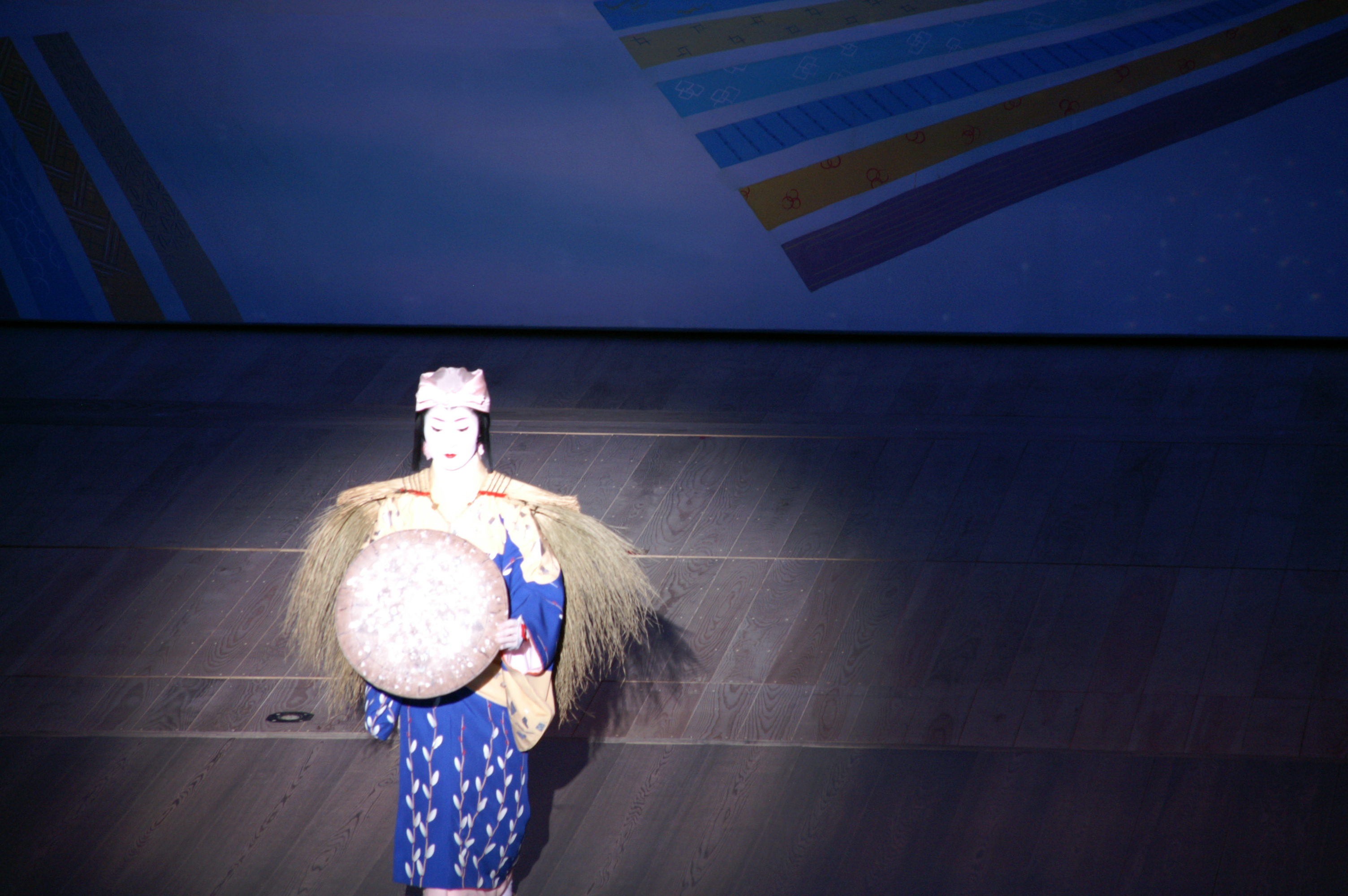
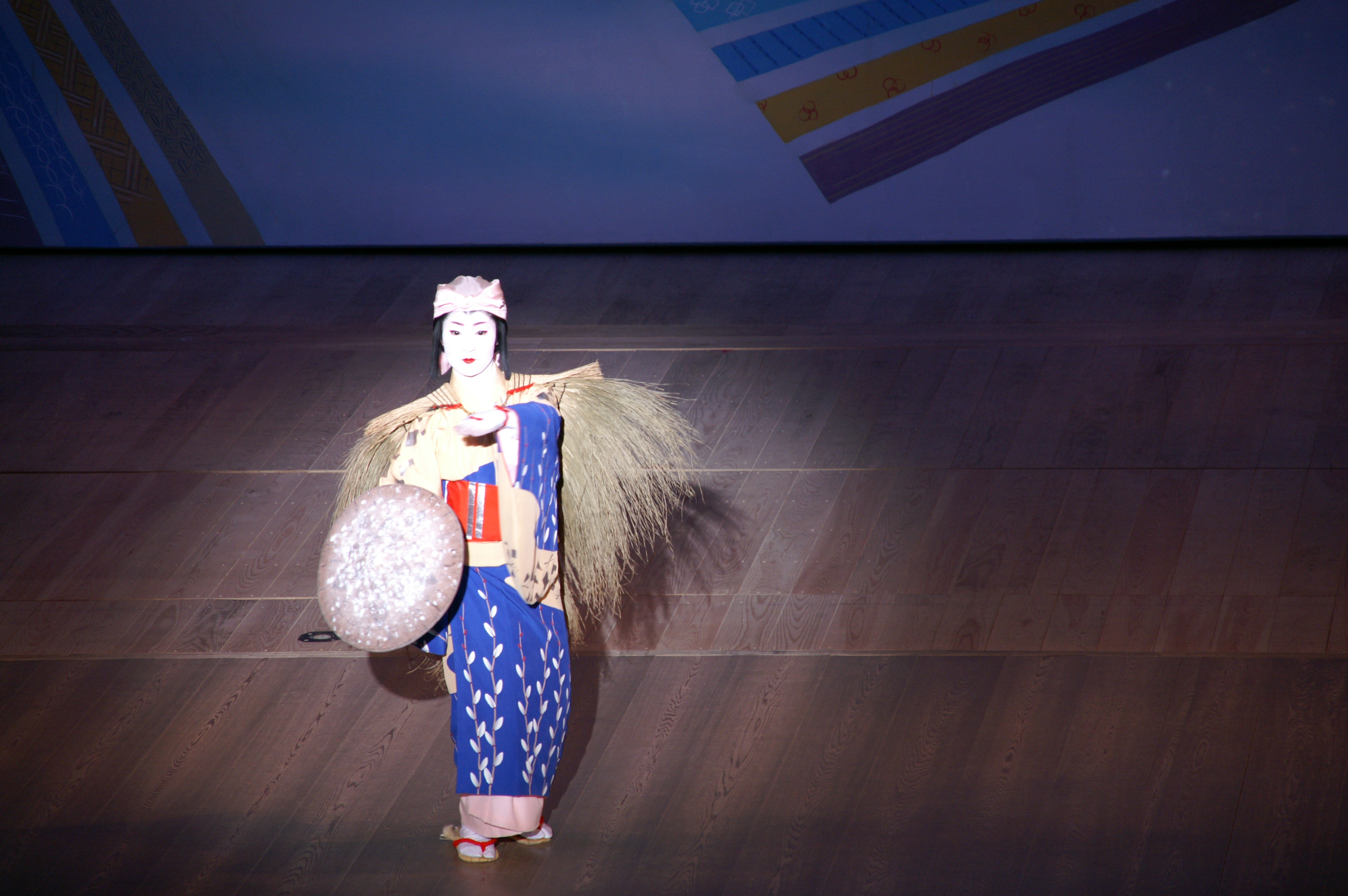
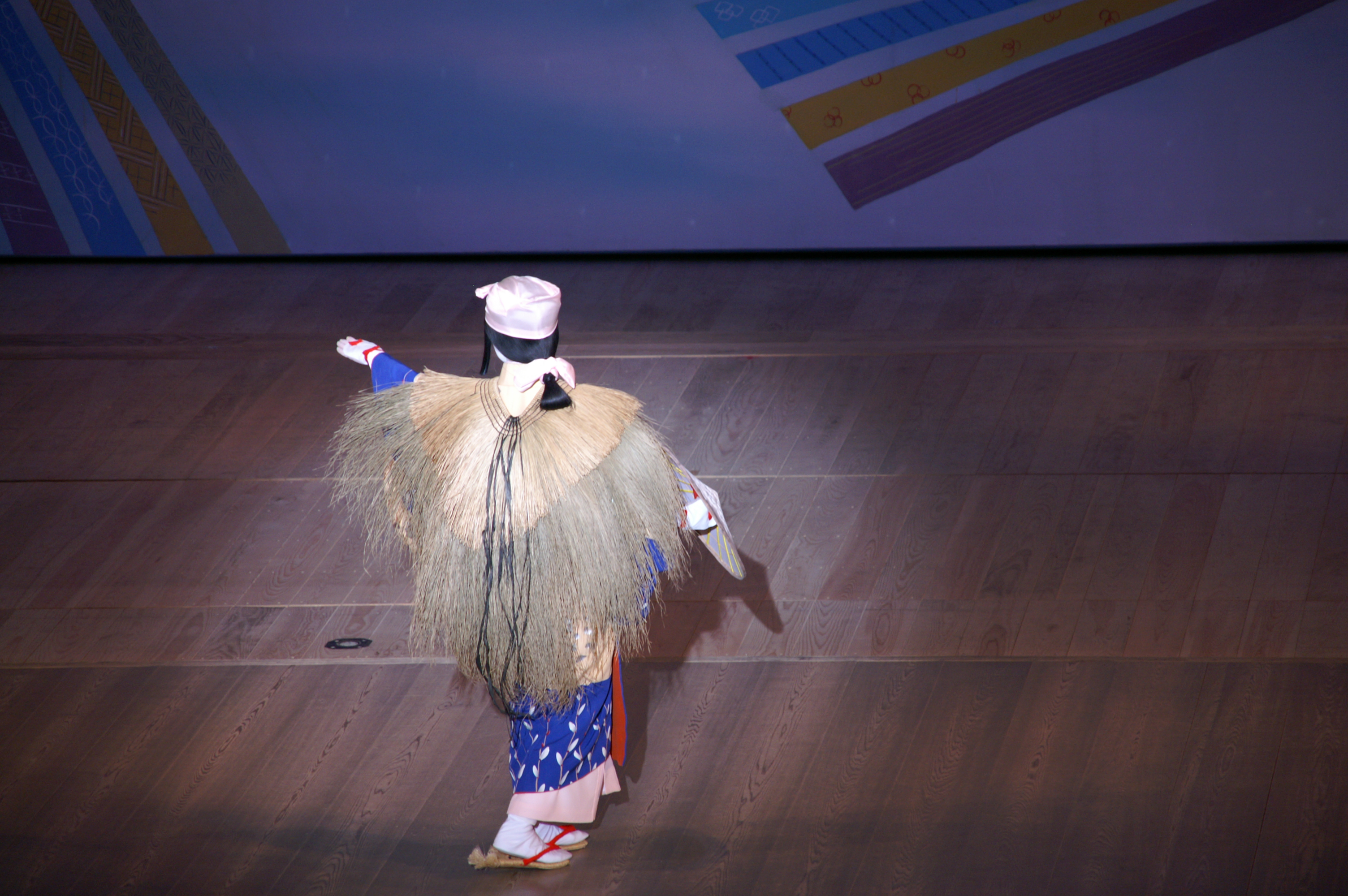
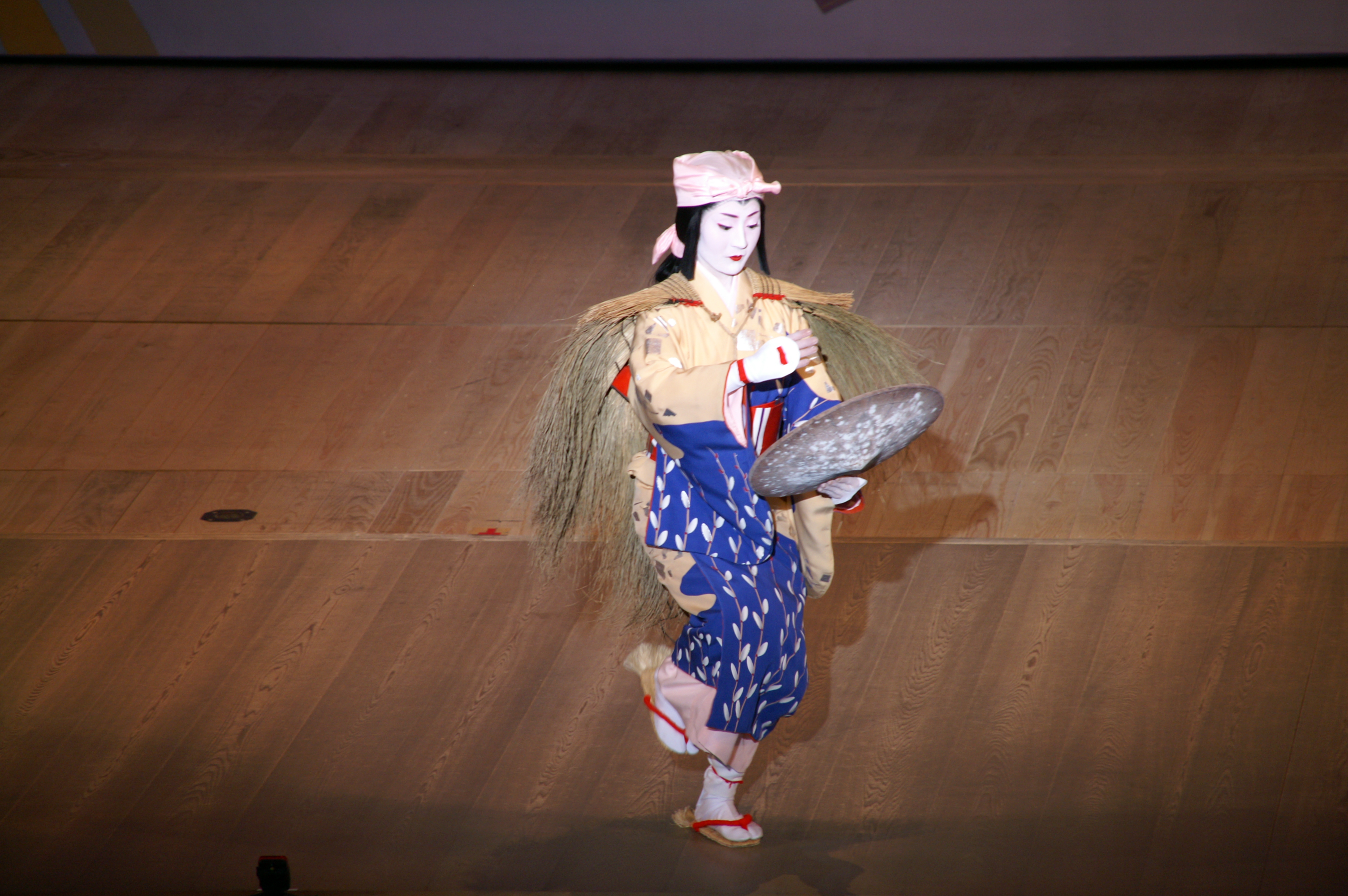
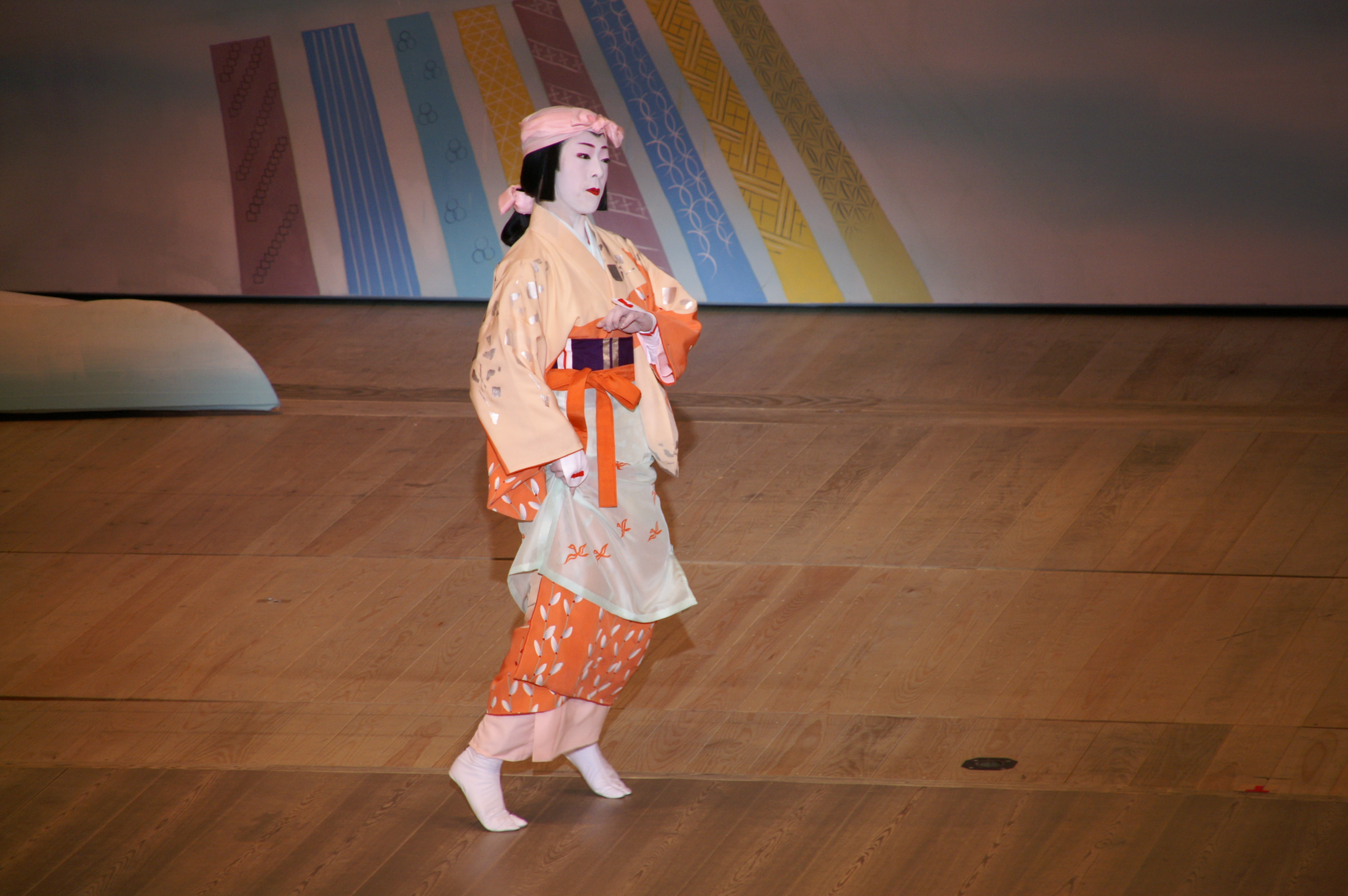
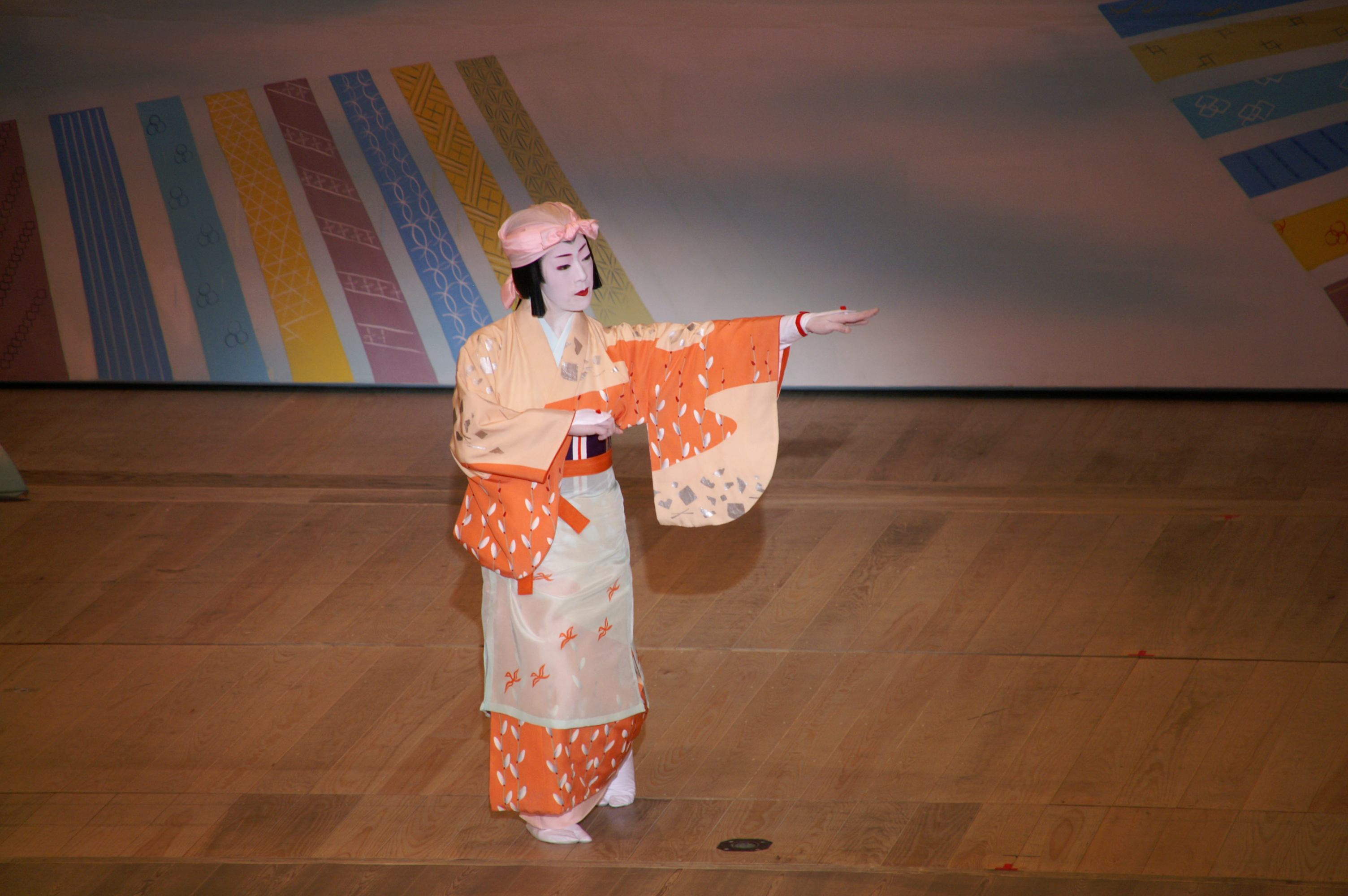
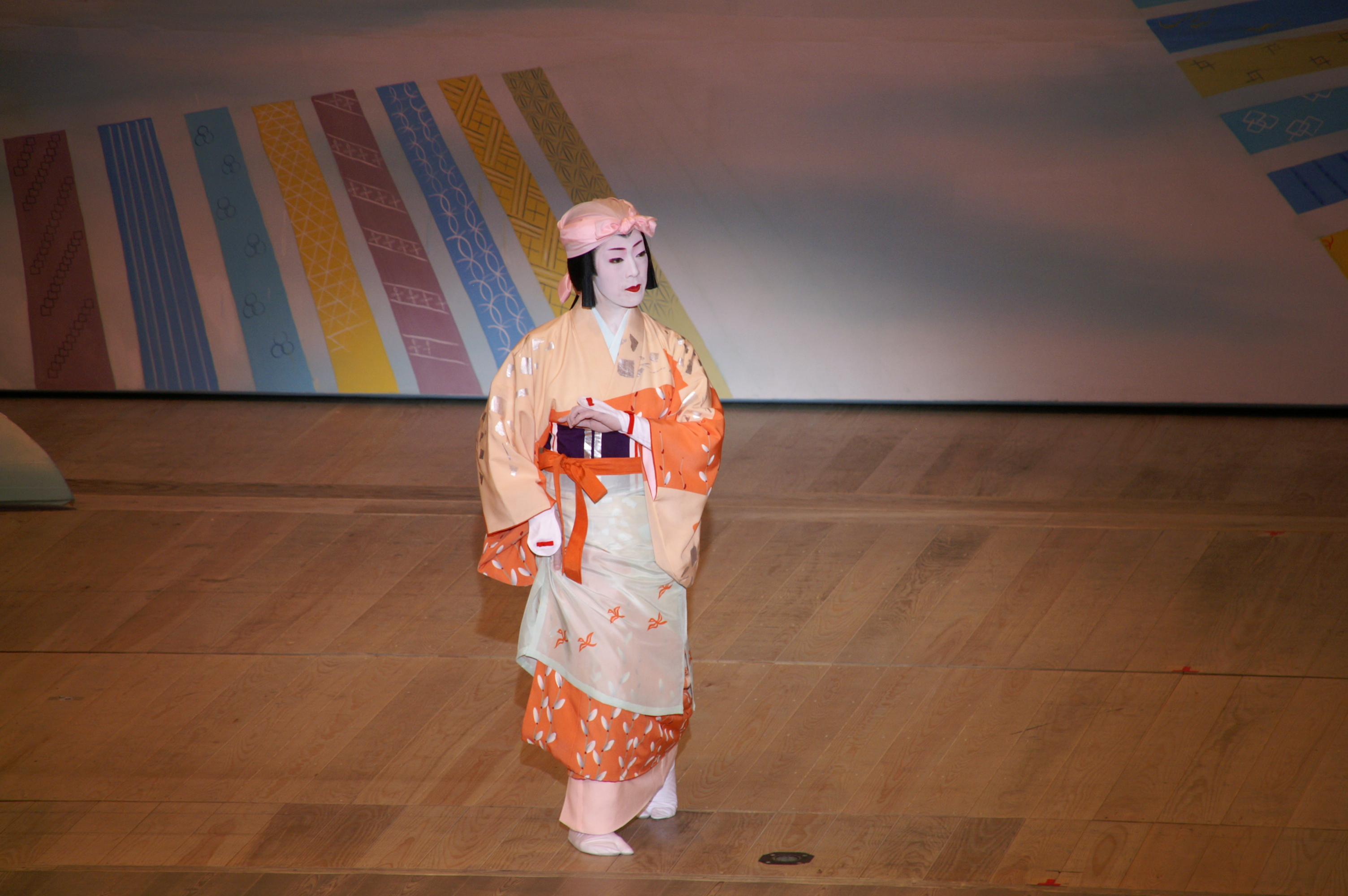
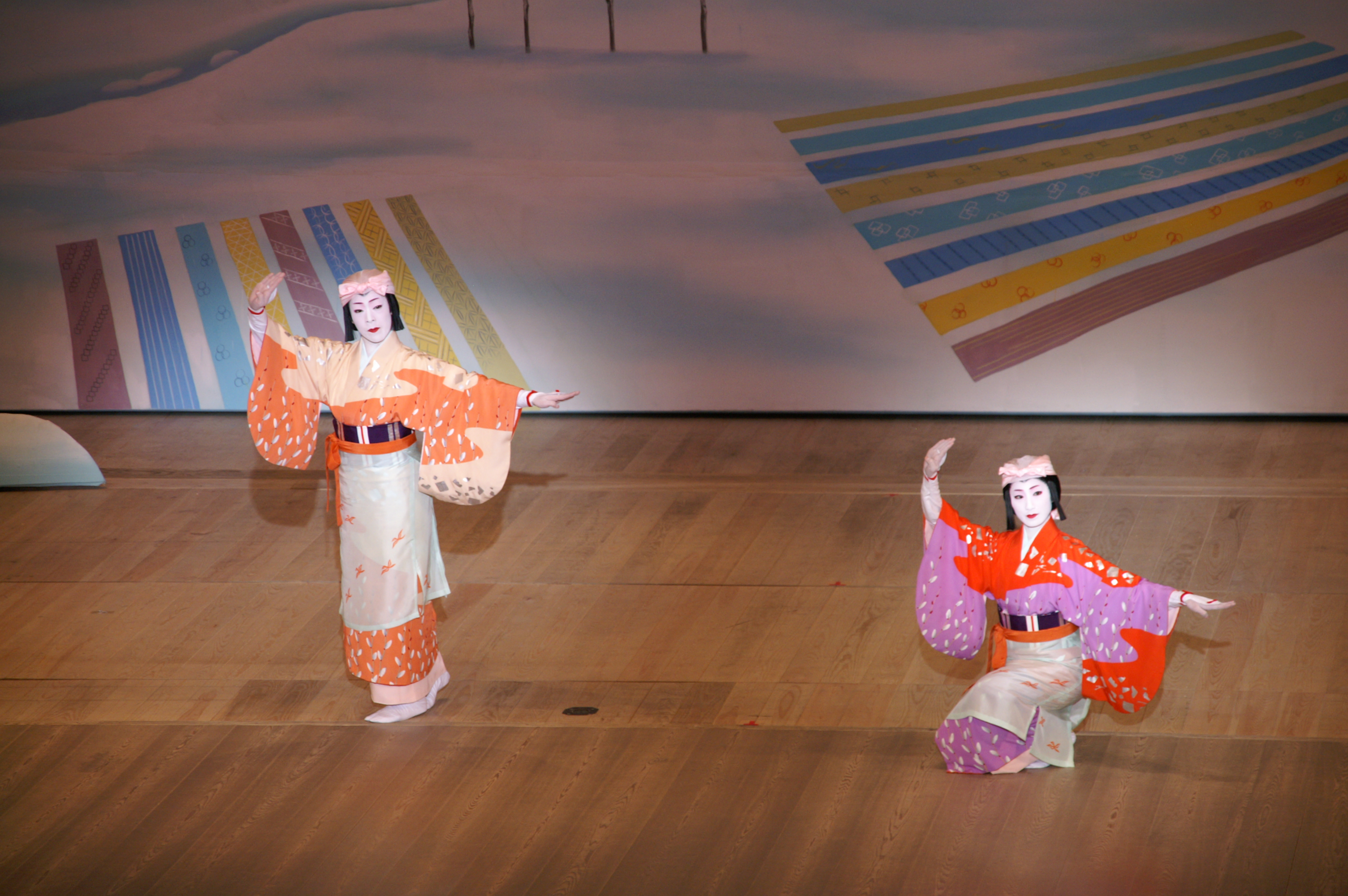
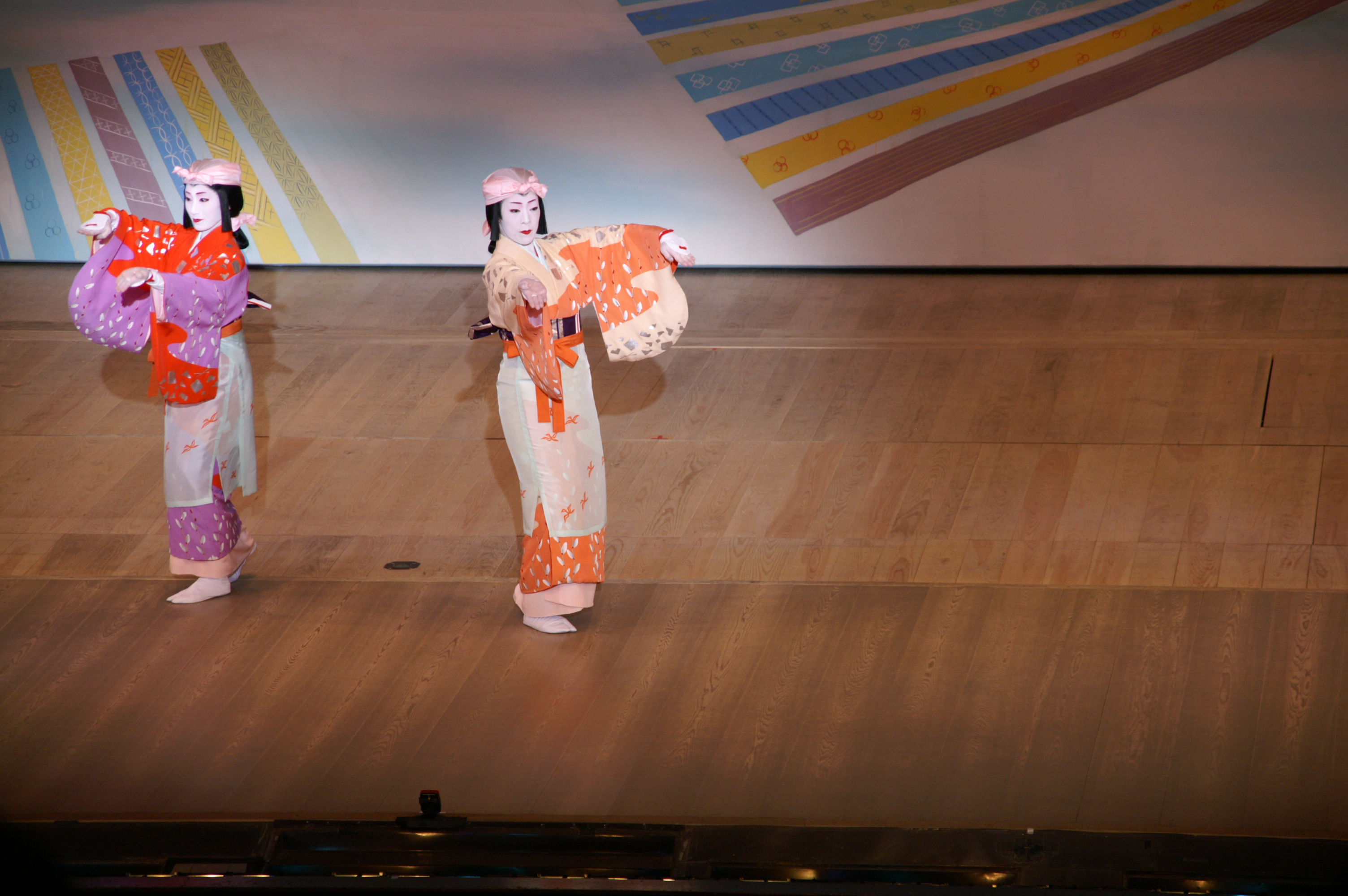
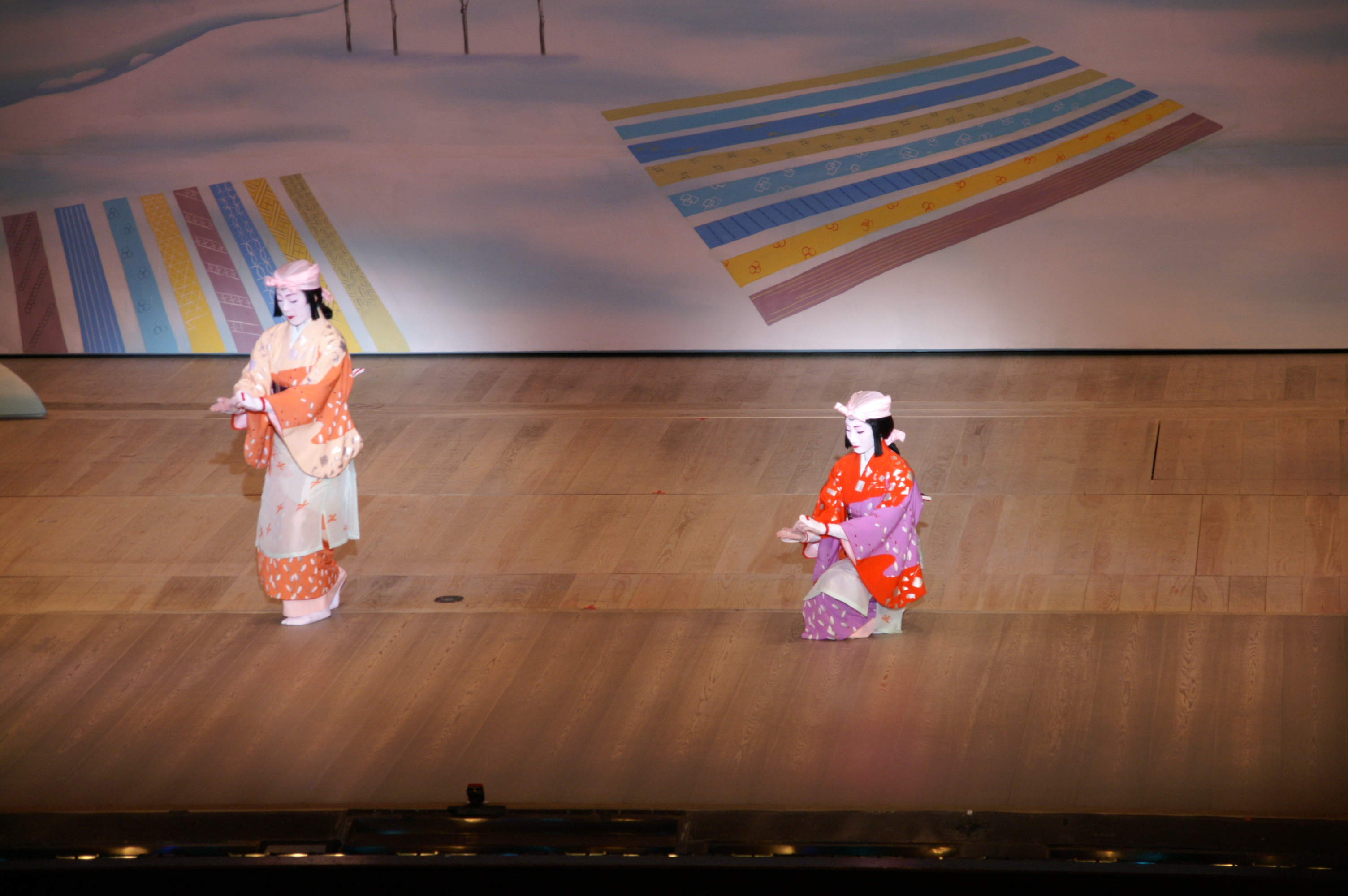
The geiko and maiko of Gion perform annual public dances, as do those of all five geisha districts in Kyoto. The oldest of these date to the Kyoto exhibition of 1872. The more popular of these is the Miyako Odori, literally “Dances of the Old Capital” (sometimes instead referred to as “Cherry Blossom Dances”), staged by the geisha of Gion Kobu, which dates to 1872. The dances run from April 1 through April 30 each year during the height of the cherry blossom (sakura) season. Spectators from Japan and worldwide attend the events, which range from “cheap” seats on tatami mats on the floor, to reserved seats with a small tea ceremony beforehand. Gion Higashi holds a similar dance in early November, around autumn leaves, known as Gion Odori; this is more recent and has fewer performances.
Miyako-Odori, auf Deutsch etwa „Tanz der Hauptstadt“) ist eines der vier großen Frühlingsschauspiele in den fünf Geisha-Vierteln (hanamachi) von Kyoto. Die im Rahmen des Miyako-Odori dargebotenen Tänze, Lieder und Schauspielakte werden von den Maiko und Geiko des Gion-Viertels aufgeführt. Die Motive schöpfen aus der klassischen japanischen Kultur und inkorporieren das Alltagsleben als auch folkloristische Elemente (z. B. aus dem Genji Monogatari).
Das Miyako-Odori findet viermal am Tag vom 1. bis 30. April im Theater Gion Kobu Kaburen-jo, nah dem Yasaka-Schrein; 35° 0′ 5,6? N, 135° 46′ 32,8? O) statt und wurde zum ersten Mal im Jahr 1872 begangen. Ursprünglich war es eine Veranstaltung als Teil der allgemein veranstalteten kulturellen Wiederbelebung Kyotos (vormals bekannt unter dem Namen Heian-kyo), nachdem der Regierungssitz 1869 nach Tokio verlegt wurde. Mittlerweile gehört das Miyako-Odori jedoch zum festen Kern des kulturellen Lebens in Kyoto und wurde 2006 zum 134. Mal aufgeführt.